
Introduction to Healthcare Data Warehouses
A healthcare data warehouse is a centralized, structured repository that consolidates data from electronic health records, laboratory information systems, radiology platforms, billing engines, and claims feeds into a single environment optimized for analytics. Unlike the transactional databases powering day-to-day clinical operations, a data warehouse in healthcare exists to answer questions that span years, departments, and patient populations.
The healthcare data warehousing market is projected to reach $8 billion by 2030, driven by value based care mandates, AI adoption, and the post-COVID demand for real-time analytics that began accelerating in 2020. Before roughly the mid-2010s, many hospitals relied on ad-hoc spreadsheets and siloed departmental reports. That approach does not survive a world where regulators, payers, and patients all expect data-driven answers within hours rather than quarters.
This article covers both the enterprise data warehouse – which unifies clinical, financial, and operational data across an entire health system – and the clinical data warehouse, which focuses on research and quality improvement use cases. Both terms appear in RFPs and vendor pitches. Understanding what each one actually delivers matters more than the label.
WTT Solutions builds custom, compliant data warehouse and analytics platforms for healthcare providers and payers. What follows is a direct account of what these systems contain, how they are built, and where projects go wrong.
What Is a Healthcare Data Warehouse?
A healthcare data warehouse is a subject-oriented, integrated, time-variant, non-volatile store of health data designed for analytics, reporting, and decision support rather than transaction processing.
Key characteristics:
- Subject-oriented. Organized around clinical and business subjects – patients, encounters, diagnoses, claims – rather than the application that generated the record.
- Integrated. Pulls from multiple sources and reconciles inconsistencies in coding, naming, and formats before data reaches analysts.
- Time-variant. Retains historical data – typically 5 to 10 years – so trends, cohort outcomes, and chronic disease trajectories can be studied longitudinally.
- Non-volatile. Once loaded, records are not overwritten. Changes create new records, preserving an audit trail.
Main data types stored in a healthcare data warehouse include:
- Clinical data: diagnoses, lab tests, vitals, medications, allergies, and procedures.
- Administrative data: admissions, discharges, transfers, scheduling, and encounter metadata.
- Financial data: payer claims, payments, cost-per-procedure, and reimbursement records.
- Patient-reported outcomes: satisfaction scores, lifestyle surveys, and social determinants of health.
An operational database – say, the PostgreSQL instance behind your EHR – is optimized for fast writes and immediate transaction consistency: placing an order, registering a patient, updating a medication list. A data warehouse is optimized for read-heavy, complex queries across millions of rows: online analytical processing workloads like calculating readmission rates by diagnosis over three years. Healthcare data warehouses can process 19 million records daily in production environments, a throughput that transactional systems are not designed to sustain for analytical queries.
Related concepts you will encounter: a data mart is a departmental subset of the warehouse focused on a single subject area. Data lakes store raw, unstructured data like HL7 messages, JSON FHIR bundles, or device logs. Both relate to the warehouse but serve different roles, covered in later sections.
Healthcare Data Warehouse vs. Clinical Data Warehouse
Healthcare organizations often distinguish between a broad enterprise data warehouse and a narrower clinical data warehouse, though the boundary shifts depending on who draws the diagram.
A clinical data warehouse is a repository specialized in clinical data – EHR records, laboratory results, imaging metadata, procedures, and medication histories – used primarily for clinical research, quality improvement, and decision support. Clinical data repositories of this kind feed observational studies, cohort identification tools, and disease-specific registries. Specialized data warehouses improve decision support for specific diseases by concentrating depth over breadth.
A broader healthcare data warehouse (or EDW) extends beyond clinical data to include cost, revenue cycle, supply chain, HR staffing, and patient satisfaction metrics. The EDW answers questions that require crossing domain boundaries: “What is the correlation between AKI incidence from 2018 to 2024 and average length of stay, and how does that map to reimbursement trends?”
At the University of Arkansas for Medical Sciences, their EDW was rebranded as the Arkansas Clinical Data Repository (AR-CDR) and enhanced with oncology, obstetrics, and specialty registries plus self-service cohort tools. Usage increased four-fold in a single year, demonstrating how broadening scope and enabling researcher access changes what a warehouse delivers.
WTT Solutions typically designs a logical EDW that can expose clinical data marts for research teams while keeping financial and operational data governed separately. Clinical data warehouses support research by providing rich datasets; the EDW wraps those datasets inside a governed, multi-stakeholder architecture.
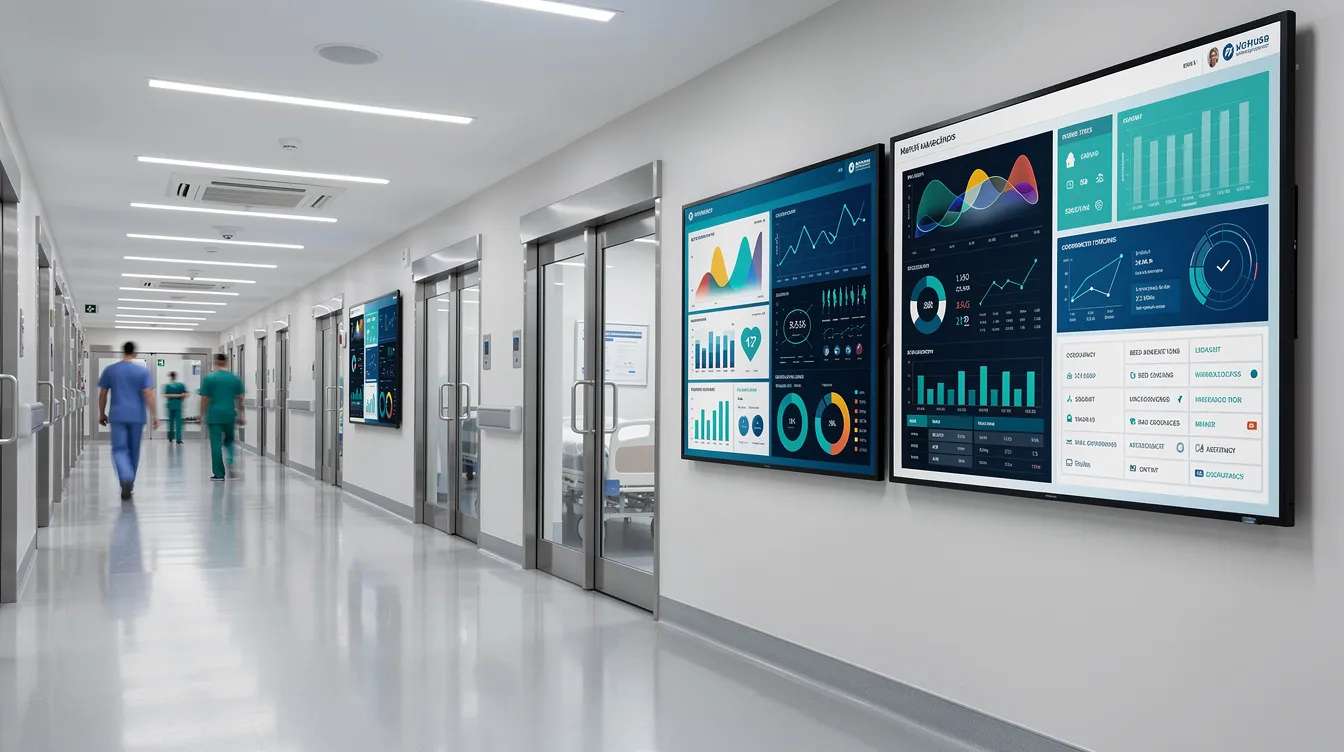
Core Components of a Healthcare Data Warehouse Architecture
Modern data warehouse architecture follows a layered model: ingestion, storage, semantic, analytics, and governance. Each layer has distinct responsibilities and failure modes.
Ingestion and integration layer. This is where data enters the warehouse. Sources push or pull via HL7 v2 messages from EHRs, FHIR R4 APIs, flat files from legacy systems, and streaming feeds from medical devices and IoT sensors. Data integration combines structured and unstructured data into a single source of truth. Data integration often involves complex ETL processes to reconcile disparate data from heterogeneous clinical and administrative systems.
Data storage layer and processing core. Relational warehouse engines – Amazon Redshift, Azure Synapse, Snowflake, BigQuery – handle structured, curated data. A data lake on S3 or Azure Data Lake Storage holds raw and semi-structured data: HL7 messages, FHIR bundles, device logs, medical imaging metadata. The data storage layer in modern designs often combines both to handle the full variety of healthcare data formats.
Semantic and presentation layer. Dimensional models – star schemas, snowflake schemas – organize data into facts and dimensions. Data marts for oncology, cardiology, or revenue cycle sit on top. Business intelligence tools like Power BI, Tableau, or Looker connect here for visualization and self-service analytics.
Governance and data security components. A metadata catalog tracks definitions and lineage. Role-based and attribute-based access control restricts who sees what. Audit logging records every query. Encryption protects sensitive data at rest and in transit. These controls are not optional in healthcare – they are the cost of operating.
Clinical Data Sources Integrated into a Healthcare Data Warehouse
The breadth of data sources integrated into the warehouse directly determines the quality and scope of analytics it can support.
Core clinical data sources include:
- EHR platforms (Epic, Cerner, Allscripts): diagnoses, orders, clinical notes, care plans, patient records.
- Laboratory systems (LIS): lab results, microbiology cultures, reference ranges.
- Radiology and imaging (RIS/PACS): radiology orders, imaging metadata, diagnostic data, turnaround times.
- Pharmacy systems: medication orders, dispensing logs, allergy records.
- Bedside monitoring systems: continuous vitals streams from ICU and telemetry devices.
Ancillary and social data sources extend the warehouse further: scheduling systems, patient portals, telehealth platforms, and social determinants of health records from external registries. These sources provide context that lab values alone cannot – whether a patient has stable housing, transportation to follow-up appointments, or food security.
Clinical data must be standardized before entering the warehouse. That means mapping local codes to healthcare data standards like ICD-10/ICD-11 for diagnoses, SNOMED CT for clinical findings, LOINC for lab observations, and RxNorm for medications. Without this standardization, the same data stored in two systems cannot be compared meaningfully.
Most healthcare organizations warehouse 5 to 10 years of clinical data to support chronic disease trend analysis, outcomes research, and longitudinal patient records. Shorter windows cut off the historical data needed for population-level insights.
Non-Clinical and Operational Data Sources
High-value healthcare analytics arises from combining clinical and non-clinical data. Neither domain alone supports the cross-functional questions that drive value based care.
Financial and claims sources:
- Payer claims feeds (ANSI X12 837/835 transactions)
- Hospital billing systems and charge capture
- Pharmacy benefit manager data
- Billing data tied to procedure and diagnosis codes
Operational systems:
- HR platforms for staffing levels, shift schedules, and credentialing
- Asset management for bed occupancy and equipment utilization
- Supply chain and inventory management systems
Patient experience and engagement sources:
- HCAHPS survey results
- Call center logs and complaint records
- Mobile app and portal usage analytics
Financial performance is improved by integrating billing and electronic health record data into the same warehouse. When claims denial rates, average time to payment, and clinical documentation quality all live in one environment, revenue cycle teams can identify root causes instead of chasing symptoms.
Data Modeling: Star Schemas, Data Marts, and Enterprise Data Warehouse
Dimensional modeling is the standard approach in healthcare data warehouses because it makes complex clinical and financial data queryable by analysts who think in business terms, not database joins.
Star schema architecture is commonly used in general data warehouses. A concrete example: a fact table called FACT_ENCOUNTER holds measures like length of stay, total charges, and disposition status. It links to dimensions:
Dimension | Examples of Attributes |
|---|---|
DIM_PATIENT | Patient ID, age, gender, ZIP, insurance type |
DIM_PROVIDER | Provider ID, specialty, department, NPI |
DIM_DIAGNOSIS | ICD-10 code, description, category, severity |
DIM_PROCEDURE | CPT code, description, body system |
DIM_TIME | Date, month, quarter, fiscal year |
DIM_LOCATION | Facility, building, unit, bed |
A data mart is a subset of the enterprise data warehouse focused on a single subject area. Data marts are condensed versions of data warehouses for specific units. A cardiology data mart might contain heart failure encounters from 2016 to 2026, pre-joined with ejection fraction labs and medication adherence metrics. Individual data marts focus on specific functional areas in healthcare – pharmacy utilization, radiology throughput, emergency department flow.
The difference between departmental data marts and an enterprise model matters: conformed dimensions – shared definitions of patient, provider, time – prevent the same data from meaning different things in different departments. WTT Solutions typically implements conformed dimensions and late-binding where appropriate, accommodating new clinical data elements with minimal rework.
Healthcare Data Warehouse vs. Data Lake and Data Lakehouse
Three architectural patterns compete for attention in healthcare data storage decisions. Each solves a different problem.
A data lake is low-cost, large-scale storage retaining raw files: HL7 feeds, JSON FHIR bundles, device logs, medical imaging metadata, and unstructured clinical notes. Data lakes excel at storing everything cheaply but can become ungoverned swamps without schema enforcement and cataloging.
A traditional data warehouse stores curated, cleaned, structured data optimized for SQL analytics and regulatory reporting. It delivers fast, predictable query performance on processed data but handles unstructured data poorly.
A data lakehouse unifies both in a single storage layer with ACID transaction guarantees, schema enforcement, and time-travel capabilities. Technologies like Delta Lake and Apache Iceberg enable this pattern. In a documented comparison, a HealthLake-based lakehouse architecture showed a 3.4× reduction in ML pipeline latency, a 67% decrease in data preparation time, and a 41% reduction in storage costs compared to a Snowflake-only warehouse across a sample of 1.2 million records.
A practical example: a stroke management program might use a data lake for raw radiology image features and high-resolution device telemetry while using the warehouse for aggregated imaging KPIs, patient outcomes, and door-to-needle time analytics. The lakehouse lets both coexist under one governance model.

Benefits of Healthcare Data Warehouses for Providers and Payers
Benefits accrue across clinical, operational, and financial domains. The warehouse is not a reporting tool – it is the infrastructure that makes reporting, analytics, and data science possible at institutional scale.
Clinical benefits. Healthcare data warehouses support better clinical decision-making with structured data. Clinicians gain access to risk stratification models, longitudinal patient records, and outcome tracking dashboards. Data warehouses support improved clinical outcomes by enabling longitudinal patient records and trend tracking.
Operational benefits. Healthcare data warehouses optimize operational efficiency through analysis of staffing and bed turnover rates. Operational efficiency is enhanced by analyzing patient flow and optimizing resource allocation. Data warehouses improve resource planning and departmental communication by surfacing capacity constraints before they cascade.
Financial benefits. Financial analytics in healthcare warehouses streamline revenue cycle management and track billing trends. Data warehouses streamline healthcare insurance claims processing and reduce the time between service delivery and payment. Data warehouses can reduce insurance fraud by analyzing claim data for anomalous patterns.
Reporting and compliance. Healthcare data warehouses facilitate the integration of various performance indicators for reporting. Data warehouses improve healthcare data reporting and analytics capabilities across the organization. Healthcare data warehouses facilitate advanced regulatory compliance and ensure timely metric submission to CMS, state agencies, and accreditation bodies.
General data warehouses enhance overall data analysis capabilities across hospitals, enabling every department from oncology to supply chain to work from the same data with the same definitions.
WTT Solutions often quantifies ROI using metrics like reduced readmissions, lower average length of stay, and faster claims turnaround times.
Data-Driven Clinical Decision Support
Pre-processed, structured data empowers clinicians at the point of care by feeding clinical decision support systems with risk scores, evidence-based guidelines, and contextual order sets.
A concrete example: identifying sepsis risk in ICU patients within the first 6 hours by analyzing vitals, lab results, and comorbidities stored in the warehouse since 2019. A machine learning model trained on historical data scores each patient in near-real time. When the score crosses a threshold, the system triggers an alert in the EHR.
Data warehouses enhance clinical decision-making through structured data access – clinicians do not need to query raw tables. They see scores, trends, and recommendations embedded in their workflow. Healthcare data warehouses enable informed strategic decision-making through key performance indicators tracking at both the bedside and the board level.
Models trained on warehouse data predict events like 30-day readmission for heart failure, adverse drug reactions, or post-surgical complications. Effective healthcare data warehouses support advanced analytics and predictive modeling capabilities that would be impossible with fragmented, department-level data.
WTT Solutions delivers these insights through embedded dashboards in EHRs or standalone web and mobile apps built on React, Angular, or Vue frontends with .NET or Node.js backends.
Improved Reporting, Analytics, and Clinical Research
Reporting obligations – CMS quality measures, infection control mandates, state registries – drive many early data warehouse investments. Regulatory reporting simplifies compliance with federal and state reporting mandates when the underlying data is already standardized and governed.
Typical standardized reports include:
- Quality measures dashboards (e.g., HEDIS, CMS Star Ratings)
- Infection control statistics updated daily or weekly
- Chronic disease registries tracking prevalence and outcomes
- Clinical quality scorecards by department and provider
Healthcare data warehouses boost clinical research by providing curated cohorts for observational studies and clinical trials. Researchers define inclusion and exclusion criteria – for example, selecting all patients with HbA1c greater than 9% and excluding end-stage renal disease cases – and the warehouse returns the cohort with relevant data elements attached.
Data warehouses enable timely and precise healthcare reporting. Healthcare organizations can utilize data warehouses to monitor clinical quality and patient outcomes across service lines and time periods. A healthcare data warehouse supports clinical quality improvement by tracking patient outcomes and surfacing variation.
WTT Solutions often builds self-service analytics layers – using tools like i2b2, TriNetX, or custom cohort builders – so research teams can define cohorts and run analyses without writing raw SQL. This approach supports future research by reducing the backlog between hypothesis and data access.
Streamlining Insurance Claims, Payments, and Fraud Detection
Claims flows between hospitals, payers, and pharmacy networks involve multiple handoffs, each a potential point of delay, error, or fraud. Integrating claims, pre-authorizations, and payment data into the data warehouse shortens claims adjudication cycles and makes denial patterns visible.
Example: using three years of claims data to find anomalies in high-cost imaging or repeated procedures by the same provider. Pattern-based fraud detection models run on EDW data to flag outliers in billing codes, length of stay, or prescription patterns. Data warehouses can reduce insurance fraud by analyzing claim data that would otherwise sit in disconnected payer and provider systems.
Dashboards built on warehouse data monitor:
- Denial rates by payer and denial reason
- Average time to payment by service line
- Appeal success rates and financial recovery
- Billing data trends across facilities
Data warehouses streamline healthcare insurance claims processing by replacing manual reconciliation with automated matching and exception-based review.
Personalized, Value-Based, and Population Health Management
Value based care contracts, introduced widely after 2010 in the US and expanded through similar initiatives in the EU and UK, require healthcare systems to manage outcomes at the population level rather than billing for volume.
Combining EHR, lab, pharmacy, and claims data in the warehouse allows segmentation of populations into high-, medium-, and low-risk cohorts. Population health management identifies high-risk cohorts and tracks chronic disease prevalence. Population health management helps healthcare organizations analyze regional data to identify at-risk patients before they present in the emergency department.
A concrete example: population health dashboards tracking 10,000 diabetic patients’ HbA1c trends, medication adherence, and hospitalization rates over multiple years. Healthcare data warehouses analyze chronic disease prevalence and support preventive care initiatives by surfacing the patients most likely to benefit from proactive outreach.
Data warehouses enhance individualized patient care through comprehensive analysis of each patient’s history, risk factors, and care gaps. This enables personalized care plans and outreach campaigns via SMS, mobile apps, or care manager workflows.
WTT Solutions can integrate these insights into existing care management platforms or custom mobile apps built with Flutter or React Native.
Healthcare Data Warehouse Architecture Models
Two primary architecture models dominate healthcare: individual (departmental) data marts and enterprise data warehouses.
Individual data warehouses focus on specific functional areas in healthcare – a pharmacy mart, a radiology mart, an ED throughput mart. They are appropriate when budget is limited, the use case is narrow, and the timeline is urgent.
Enterprise data warehouses integrate data from multiple healthcare sources into a unified platform serving the entire organization. The enterprise model unifies definitions of patient, encounter, and provider so that analytics are consistent across departments.
Late-binding and hybrid architectures offer a middle path: some data elements remain loosely defined until consumption time, providing flexibility as regulations and clinical definitions evolve. Healthcare data warehouses aid in managing healthcare operations by tracking utilization and patient flow from a single, governed environment.
WTT Solutions typically recommends a scalable EDW backbone with modular data marts for key service lines – oncology, cardiology, emergency medicine – designed to grow as the organization’s analytics maturity increases.
Individual Data Marts in Healthcare
An individual data mart is a focused, departmental subset of a broader warehouse, scoped to a single subject area or business function.
Examples:
- Pharmacy data mart: medication usage analysis, formulary compliance, controlled substance tracking.
- Radiology data mart: modality utilization, turnaround times, diagnostic data by imaging type.
- ED data mart: door-to-provider times, left-without-being-seen rates, patient flow bottlenecks.
Pros: Faster implementation – typically 3 to 6 months – focused data model, easier stakeholder alignment, and quicker wins.
Cons: Risk of data silos and siloed definitions. Duplication of patient and provider dimensions across marts. Difficulty scaling to enterprise-level advanced analytics when each mart defines the same data differently.
General data warehouses improve overall data analysis capabilities when departmental marts eventually feed into a unified layer. WTT Solutions designs data marts to be compatible with a future EDW by reusing conforming dimensions and common patient identifiers from the start.
Enterprise Data Warehouse (EDW) in Healthcare
The enterprise data warehouse is the single source of truth for large health systems, payer networks, and integrated delivery networks. Enterprise data warehouses integrate data from multiple sources – EHRs, claims, HR, supply chain, patient engagement – into a governed, queryable platform.
Core layers:
- Staging zone: raw data lands here, minimally transformed.
- Integration zone: standardized, deduplicated, mapped to conformed dimensions.
- Subject-area data marts: curated views for clinical, financial, and operational stakeholders.
- Semantic layer: BI tools, self-service analytics, business glossary.
Enterprise data warehouse design supports multiple stakeholders: clinicians querying clinical outcomes, finance teams tracking revenue cycle KPIs, operations monitoring bed utilization, and research departments identifying cohorts. A healthcare data warehouse provides a structured environment for monitoring data governance and quality across all of these domains.
Governance at the EDW level requires data stewardship committees, standardized metric definitions (readmission within 30 days, mortality within 90 days), and documented change control processes.
WTT Solutions builds EDWs using modern stacks – .NET or Node.js backends, React, Angular, or Vue frontends, cloud warehouses like Snowflake or BigQuery – tailored to client preferences and regulatory context.

Security, Privacy, and Compliance in Healthcare Data Warehouses
Data security and regulatory compliance – HIPAA in the US, GDPR in the EU, and local regulations elsewhere – are non-negotiable in any system that touches patient data. There is no “we will add security later” in healthcare.
Core controls:
- Encryption: AES-256 at rest, TLS 1.2+ in transit.
- Access control: Row-level and column-level security. Fine-grained role-based access ensuring clinicians see only data relevant to their patients or departments.
- De-identification and pseudonymization: Techniques like expert determination, safe harbor, and Key-Based Secured Record Linkage (KSRL) for linking patient records without exposing identities.
- Audit logging: Every query, export, and access attempt recorded and reviewable.
- Authentication: Multi-factor authentication for all warehouse access points.
- BAAs: Business Associate Agreements required for any third-party services or cloud vendors handling sensitive data.
Data security in healthcare data warehouses is built with strict access controls and encryption as foundational requirements, not afterthoughts. WTT Solutions has experience implementing secure architectures for US HIPAA-covered entities and GDPR-regulated organizations in the EU.
Implementing a Healthcare Data Warehouse: Step-by-Step Roadmap
Implementation should follow a structured roadmap to reduce risk and cost overruns. Healthcare data warehouse projects that skip planning stages tend to spend more on rework than they saved on shortcuts.
Major stages:
- Strategic planning and use-case prioritization
- Architectural design and technology selection
- Data integration, ETL/ELT, and data quality management
- Testing, validation, and deployment
- Ongoing operations, maintenance, and evolution
A cross-functional steering group – clinicians, IT, finance, and compliance – should be involved from project inception. Without clinical input, the warehouse answers the wrong questions. Without compliance input, it answers them illegally.
Typical timelines: 3 to 6 months for a focused data mart; 12 to 24 months for a full EDW rollout depending on scope, data quality, and organizational maturity.
WTT Solutions offers both end-to-end delivery and staff augmentation models to support each implementation phase.
Stage 1: Strategic Planning and Use-Case Prioritization
Clear goals and governance matter more than technology choice at this stage. Picking Snowflake versus BigQuery before knowing your top five use cases is building a house before drawing the floor plan.
Key activities:
- Workshops with executives and clinical leaders to identify 3 to 5 high-value initial use cases: readmission reduction, sepsis surveillance, diabetes management, claims denial analysis.
- Creation of a data strategy document covering target KPIs, regulatory constraints, data ownership, and funding.
- Alignment with broader digital health roadmaps – EHR modernization, telehealth expansion, AI initiatives.
- Identifying relevant data and data sources required for each use case.
WTT Solutions facilitates strategy sessions and helps quantify expected ROI and risk for shortlisted use cases before architecture work begins.
Stage 2: Architectural Design and Technology Selection
This is where EDW versus data mart, cloud versus on-premise versus hybrid, and data lake versus warehouse decisions are made based on evidence rather than vendor marketing.
Evaluation criteria:
Factor | Considerations |
|---|---|
Data volume | TBs of imaging vs. GBs of structured data |
Concurrency | Number of simultaneous analysts and dashboards |
Budget | Cloud consumption vs. capital expenditure |
In-house skills | SQL-heavy teams vs. Spark/Python teams |
Regulatory context | Data residency, HIPAA, GDPR |
Technology selection spans database platforms (Snowflake, BigQuery, Azure Synapse, on-premise SQL Server), data integration tools (FHIR APIs, HL7 interfaces, ETL tools like Azure Data Factory or Airflow), and BI layers.
Design for scalability, modularity, and interoperability – HL7, FHIR, DICOM, open APIs. WTT Solutions provides architecture blueprints and proof-of-concepts validated with real client data before committing to a full build.
Stage 3: Data Integration, ETL/ELT, and Data Quality Management
Data warehouses utilize ETL or ELT processes for data transformation. ETL extracts data from source systems, transforms it in a staging area, and loads clean records into the warehouse. ELT loads raw data first and transforms it inside the warehouse engine – an approach that scales better on modern cloud platforms.
Building ingestion pipelines from EHRs, labs, imaging systems, and claims feeds involves decisions about scheduling: near-real-time change-data capture versus nightly batch loads versus event streaming with Kafka or Kinesis.
Data quality rules are critical. Healthcare data warehouses face significant data quality issues including:
- Missing demographics (no recorded ZIP code, unknown gender)
- Impossible lab values (negative hemoglobin, glucose of 5000)
- Invalid codes (deprecated ICD-9 codes in current encounters)
- Timestamp inconsistencies across systems in different time zones
Data standardization maps local codes to SNOMED CT, LOINC, ICD-10/11, and UCUM units. Lack of standardized patient identifiers complicates data integration – matching the same patient across three EHRs without a universal ID requires probabilistic matching and careful governance.
WTT Solutions implements automated data quality dashboards showing error rates, data freshness, and lineage so problems surface before they reach a clinician’s report.
Stage 4: Testing, Validation, and Deployment
Rigorous testing is non-optional in healthcare. A wrong aggregate on a readmission dashboard can drive a misguided clinical intervention or misrepresent performance to a regulator.
Validation activities:
- Reconciliation: Compare warehouse aggregates with source system reports for defined sample periods (e.g., Q1 2025). If the numbers do not match, find out why before going live.
- Unit tests: Verify individual transformation logic – date parsing, code mapping, null handling.
- Integration tests: End-to-end pipeline tests from source extraction through BI dashboard rendering.
- Performance tests: Run complex analytical queries under expected concurrency to verify response times.
- Security penetration tests: Attempt unauthorized data access before production exposure.
Deployment strategies: phased rollout by department, parallel run with legacy reports for a defined period, and structured user training on BI tools and self-service analytics.
WTT Solutions sets up CI/CD pipelines for ETL and analytics code, enabling safe, repeatable deployments that can be audited.
Ongoing Operations, Maintenance, and Evolution
A healthcare data warehouse is a living system, not a one-time project. The day after deployment is when the real work begins.
Regular maintenance tasks:
- Schema updates as clinical definitions change (new ICD-11 codes, updated quality measure specifications)
- Onboarding new data sources – telehealth platforms, wearable device feeds, new partner facilities
- Security patching and infrastructure updates
- Performance tuning as data volumes grow and query patterns shift
User feedback drives evolution. Clinicians who see initial dashboards will request new metrics, drill-downs, and filters. Research teams will need new subject areas. Finance will want contract-level performance views. Each request goes through a governance process.
WTT Solutions provides long-term support, SRE services, and team augmentation for data engineering and BI roles to keep the warehouse current and performant.
Data Security, Access Control, and Governance Framework
The governance model wrapping the technology stack determines whether the warehouse is trusted or avoided.
Access control. Role-based and attribute-based access ensures clinicians see only data relevant to their patients or departments. Researchers access de-identified datasets through a separate governance path. Data access policies should be enforceable technically, not just documented in a policy binder.
Governance roles:
- Data owners: Accountable for accuracy and appropriateness of data in their domain.
- Data stewards: Day-to-day quality checks, issue resolution, terminology management.
- Governance board: Approves new data uses, monitors compliance, resolves cross-domain disputes.
Retention and archival. Policies for how long detailed records are kept – typically 7 to 10 years per local regulations – and how archived data can be recalled for audits or litigation.
WTT Solutions implements governance tooling (data catalogs, business glossaries, lineage trackers) and trains client teams in their use, because tools without adoption are just expenses.
Common Challenges in Healthcare Data Warehouse Projects
Challenges in healthcare data warehouse projects are mostly organizational and data-related rather than purely technical. The database will scale. The people and data problems may not.
Integration complexity. Integrating disparate data sources can limit scalability. Healthcare systems run heterogeneous EHRs, legacy systems without modern APIs, and non-standard data formats that resist automated ingestion. Data interoperability is a major challenge in healthcare integration.
Data quality. Incomplete documentation, inconsistent coding, and shifting clinical definitions make data quality a persistent concern. Disparate data from different facilities may use different local code sets for the same data, creating data integration issues that surface only during statistical analysis.
Shifting requirements. Clinicians who see initial dashboards inevitably want something different. This is normal and healthy – but requires a change management process, not ad-hoc sprint additions.
Talent scarcity. Mid-size healthcare organizations rarely have in-house data engineering and healthcare analytics expertise sufficient to build and maintain an EDW. Data science, data mining, and BI skills are in short supply.
WTT Solutions addresses these challenges through incremental delivery, domain-experienced teams, and strong change management practices.
Typical Use Cases of Healthcare Data Warehouses
Use cases span clinical outcomes, operations, finance, and compliance. The warehouse enables all of them because it centralizes the relevant data that each function needs.
Clinical outcomes optimization:
- Diabetes and hypertension management registries
- Sepsis early warning systems drawing on real-time vitals and lab data
- Oncology pathway adherence tracking
- Comprehensive analysis of clinical processes and outcomes
Operational use cases:
- Bed occupancy forecasting and plan resource allocation
- Emergency department wait time analytics and patient flow optimization
- Operating room utilization improvement
- Healthcare data warehouses can manage 19 million daily records to support these workloads
Financial and risk use cases:
- Claims denial analysis and root cause identification
- Fraud detection through data mining techniques on billing patterns
- Contract performance management for value-based care programs
- Tracking valuable insights across payer portfolios
WTT Solutions prioritizes use cases with clear KPIs and quick wins to build organizational trust in analytics before scaling to enterprise scope.
Case Example: Diabetes and Chronic Disease Management
Consider a regional health system monitoring a registry of 12,000 diabetic patients from 2017 through 2026 using a healthcare data warehouse.
Data elements flowing into the warehouse:
- HbA1c values from laboratory systems, tracked quarterly
- Medication adherence signals from pharmacy claims and refill patterns
- BMI trends from clinical encounters
- Comorbidity flags: hypertension, CKD staging, peripheral neuropathy
- ED visits and inpatient hospitalizations with associated billing data
The warehouse enables the care management team to query for patients whose HbA1c has exceeded 9% for two consecutive quarters and who have not had an endocrinology referral. Exclusion criteria – patients in hospice or those who have left the service area – refine the cohort further.
Proactive outreach reaches high-risk patients via care managers, SMS reminders, and digital health tools. Tangible outcomes the system tracks: reduced ED visits, fewer amputations, improved average HbA1c across the managed population. Store data long enough and the longitudinal trends become visible and actionable.
WTT Solutions can build end-to-end flows from EDW risk scoring to notifications in web or mobile care management apps, connecting data analysis directly to clinical action.

Evolution of Healthcare Data Warehouses: From OLAP to AI and Real-Time Analytics
The progression is clear: early 2000s OLAP cubes for static reporting, 2010s big data and data lakes for scale, 2020s AI, lakehouse architectures, and real-time streaming.
Traditional online analytical processing met initial needs for scheduled reports and slice-and-dice analysis. But OLAP struggles with unstructured data like clinical notes, medical imaging, and genomic sequences. As healthcare data grew in variety – not just volume – the architecture had to evolve.
Integration of AI and machine learning on warehouse and data lake data now powers predictive and prescriptive analytics: readmission risk models, NLP-based clinical notes summarization, anomaly detection on such data as lab trends and medication patterns. Data science teams train models on the same data that feeds dashboards, ensuring consistency between predictions and reported metrics.
Near-real-time analytics powered by streaming technologies like Apache Kafka detect events within minutes: sepsis onset, ICU capacity saturation, critical lab results. Organizations using these architectures report adoption of near-real-time clinical quality metrics growing by 8 to 14 percentage points year-over-year, according to the CHIME “Most Wired” national trend survey.
The healthcare data warehousing market is projected to reach $8 billion by 2030 in part because these AI and real-time capabilities require robust, governed data infrastructure as their foundation. Specialized data warehouses target specific clinical or research needs while enterprise platforms support the full breadth of operational, financial, and research analytics.
WTT Solutions brings capabilities in AI and generative AI – NLP for clinical notes summarization, anomaly detection, predictive modeling – built on top of warehouse data using modern cloud infrastructure.
Why Partner with WTT Solutions for Healthcare Data Warehousing
WTT Solutions is a custom software and data engineering partner for regulated industries, with deep experience in healthcare. We build the systems described in this article – not vendor platforms, but custom architectures designed for your data, your workflows, and your compliance obligations.
Healthcare-specific strengths:
- EHR integrations via HL7 and FHIR R4
- HIPAA-aware architecture from day one – security risk assessments, BAAs, encryption, access controls
- Experience with clinical and financial data domains, including claims processing, cohort identification, and population health
Technical stack expertise:
- Backend: .NET, Node.js
- Frontend: React, Angular, Vue
- Mobile: Flutter, React Native
- Cloud data warehouses: Snowflake, BigQuery, Azure Synapse, AWS HealthLake
Service models:
- Full-cycle project delivery from strategy through production support
- Staff augmentation for data engineering, BI development, and analytics roles
- Modernization of legacy healthcare data warehouses – migrating from on-premise to cloud, from batch to streaming, from departmental silos to an enterprise centralized data repository
If your current analytics stack is a collection of departmental spreadsheets and overnight report extracts, that gap has a measurable cost in delayed decisions, compliance risk, and missed revenue. Talk to WTT Solutions about your current data warehouse, data lake, or EDW challenges. We will tell you what is realistic before the statement of work is signed.
Leave a Reply