
Healthcare providers spend countless hours on clinical documentation, often at the expense of direct patient care. This documentation burden has become one of the most significant challenges facing modern medicine, with physicians dedicating substantial portions of their day to administrative tasks rather than treating patients. Now, artificial intelligence is revolutionizing this process, transforming how medical records are created, managed, and utilized across health systems worldwide.
AI medical documentation represents a fundamental shift from traditional manual documentation methods to intelligent automation that captures, processes, and structures clinical information in real time. This technology promises to restore focus on patient care while ensuring comprehensive, accurate clinical notes that meet regulatory requirements and support quality healthcare delivery.
In this comprehensive guide, we’ll explore how AI medical documentation works, examine the core technologies driving this transformation, and discuss practical implementation considerations for healthcare providers looking to modernize their clinical workflows.
What is AI Medical Documentation?

AI medical documentation refers to the use of artificial intelligence technologies to automate, streamline, and enhance the clinical documentation process in healthcare settings. These digital tools implement AI to record, transcribe, and summarize interactions between physicians and patients, fundamentally transforming how medical records are created and maintained.
Traditional medical documentation has long relied on human medical scribes—professionals who live-record and document sessions between doctors and patients. These scribes handle responsibilities including medical history documentation, exam note-taking, patient chart completion, and summarization of medical test results. AI medical documentation systems aim to replicate and enhance these functions through technological means.
An AI medical scribe is specifically a digital tool that uses artificial intelligence to replace or augment the traditional human scribe role. The broader category of ai medical documentation encompasses various technologies and applications beyond just transcription, including data structuring, quality assessment, clinical validation, and decision support.
One particularly important subcategory is ambient clinical intelligence (ACI), which represents an automated system that captures critical medical information from patient-physician interactions using natural language processing and generative AI models to produce clinical notes without intrusive recording equipment. This technology is specifically designed to operate non-intrusively in the background, allowing natural and unobstructed medical consultations.
Real-time transcription capabilities eliminate manual documentation during patient visits, enabling physicians to maintain focus on the patient while the AI tool automatically captures and processes the conversation. Integration with Electronic Health Records (EHR) systems ensures seamless workflow automation, allowing the AI-generated documentation to flow directly into existing clinical systems without manual data entry.
Core AI Documentation Technologies
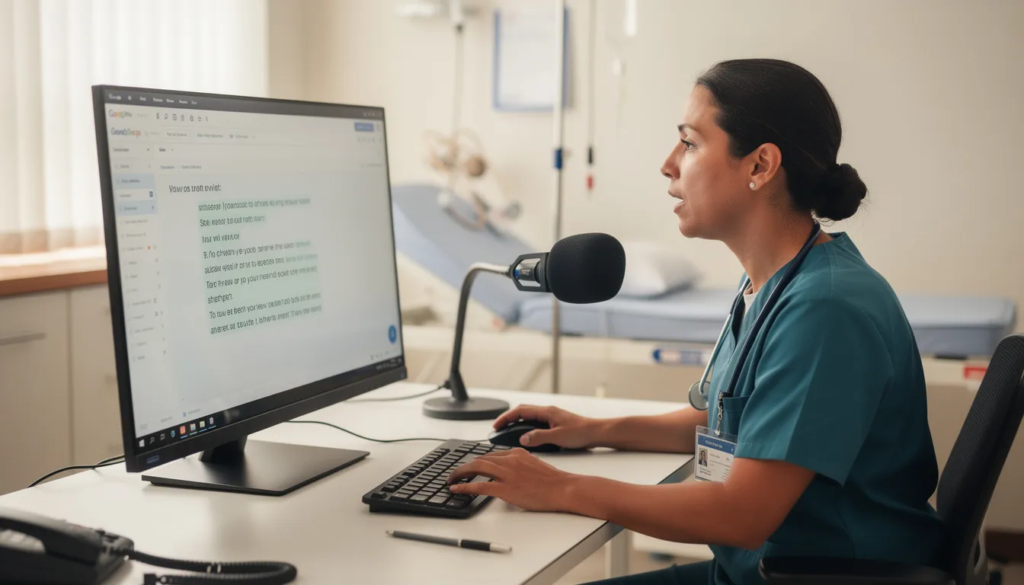
The technological foundation of ai medical documentation rests on several interconnected AI disciplines and innovations that work together to create sophisticated documentation systems. Understanding these core technologies helps healthcare providers make informed decisions about implementation and integration.
Advanced speech recognition systems form the first layer of AI medical documentation technology. These systems accurately capture medical terminology and diverse accents, converting audio from patient-physician interactions into text format. Modern speech recognition technology has evolved significantly, achieving accuracy rates of 98% or higher even in challenging clinical environments with background noise and multiple speakers.
Natural language processing (NLP) algorithms serve as the intelligence layer that organizes unstructured conversation data into meaningful clinical information. NLP enables computer systems to understand language similarly to how humans do, allowing healthcare providers to automatically consolidate medical data from diverse sources including lab results, patient records, insurance claims, and other documentation types. An NLP-powered application can process massive volumes of documents and extract actionable insights—a task that would be incredibly difficult for human staff to accomplish manually.
Large language models (LLMs) trained on medical documentation standards and clinical workflows represent the most recent advancement in the field. These models are trained on vast amounts of text data and allow platforms to comprehend, summarize, and generate content with remarkable accuracy. Healthcare-specific large language models are further refined through training on healthcare-specific data from multiple specialties and languages, then fine-tuned by experts to produce accurate clinical notes.
Machine learning models that adapt to individual physician documentation styles and preferences provide personalization capabilities that improve over time. ML-based documentation systems are specifically trained to identify patterns in collected data and convert these patterns into visualized forms that support treatment outcomes. For instance, doctors can use machine learning to analyze a patient’s electronic health record to devise personalized treatment plans, and ML systems can assist in identifying medical coding errors, spotting non-compliance, and improving medical procedures.
The integration of these technologies creates end-to-end documentation workflows where real-time language understanding and processing support medical note-taking, with systems capable of integrating with existing medical systems and databases to consolidate information from various sources. This real-time processing capability represents a significant departure from traditional documentation methods that require post-encounter transcription and review.
Key Features of AI Medical Scribes
Modern AI medical scribes offer a comprehensive suite of features designed to address the complete spectrum of clinical documentation needs. These capabilities span the entire patient encounter timeline, from pre-visit preparation through post-visit follow-up tasks.
Real-time conversation capture with 98%+ accuracy rates for clinical documentation ensures that important information discussed during patient visits is accurately recorded without requiring physician attention. Advanced ai tool systems can distinguish between medically relevant conversation and casual dialogue, filtering out unnecessary information while preserving critical clinical details.
Automated generation of progress notes, SOAP notes, and specialty-specific documentation formats eliminates the time-consuming task of manual note creation. These systems understand the structure and requirements of different note types, automatically organizing captured information into the appropriate format based on the clinical context and physician preferences.
Intelligent data structuring organizes patient information into searchable, coded formats that support clinical decision-making and compliance requirements. This ability to transform unstructured conversation into structured data enables better information retrieval and analysis across patient encounters.
Voice command recognition for hands-free documentation control during patient encounters allows physicians to direct the AI system without interrupting the natural flow of conversation. Clinicians can issue commands to start or stop recording, mark specific sections for emphasis, or request immediate note generation through simple voice commands.
Pre-Visit AI Capabilities
AI-driven pre-charting reviews previous visits, lab results, imaging, and medications before appointments, providing physicians with comprehensive context for upcoming patient encounters. This automated preparation reduces the time physicians traditionally spend reviewing charts and enables more focused, efficient visits.
HCC code insights for risk adjustment and quality metrics preparation help healthcare providers maintain accurate coding for value-based care initiatives. The AI system analyzes patient history and current clinical status to identify appropriate risk adjustment codes, supporting both clinical care and financial performance. For healthcare organizations seeking tailored technology, custom software development solutions in New York can further enhance operational efficiency and innovation.
Patient history summarization from multiple data sources creates comprehensive visit preparation documentation. The system consolidates information from various sources including prior visit notes, lab results, imaging reports, and external records to provide a complete picture of the patient’s medical status.
Automated appointment context building reduces pre-visit preparation time by automatically gathering and organizing relevant patient information. This feature enables physicians to enter patient encounters with complete context, improving efficiency and patient care quality.
During-Visit Documentation
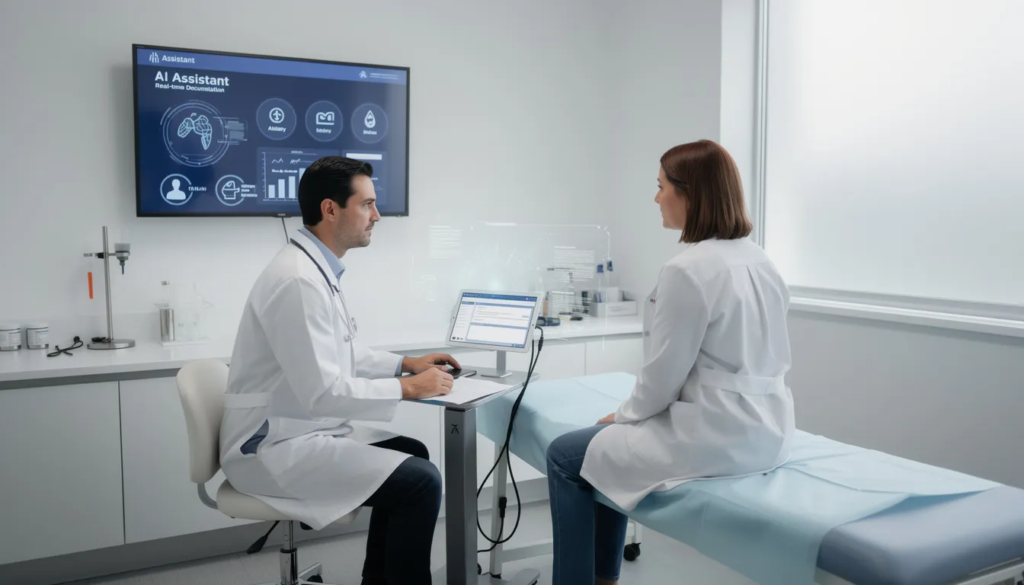
Ambient listening technology captures natural physician-patient conversations without interruption, operating discretely in the background while maintaining the natural flow of clinical interactions. This non-intrusive approach ensures that the presence of custom software development and documentation technology doesn’t affect the physician-patient relationship.
Context-aware note generation adapts to specialty-specific documentation requirements, understanding the unique needs of different medical specialties and adjusting documentation style accordingly. Whether documenting a primary care visit, an oncology consultation, or a surgical procedure, the system applies appropriate medical terminology and format standards.
Real-time order entry assistance for labs, imaging, procedures, and medications streamlines the ordering process during patient visits. The AI system can suggest appropriate orders based on the discussion context and automatically generate orders for physician review and approval.
Intelligent filtering distinguishes medically relevant conversation from casual dialogue, ensuring that clinical notes focus on pertinent medical information while excluding social conversation or off-topic discussion. This capability ensures that notes remain concise and clinically relevant.
Post-Visit Automation
Automated medical coding with ICD-10, CPT, and HCPCS code suggestions ensures accurate billing and compliance with coding standards. The AI system analyzes the documented encounter and suggests appropriate codes, reducing coding errors and supporting proper reimbursement.
EHR integration for seamless note import and workflow completion ensures that AI-generated documentation flows smoothly into existing clinical systems. This integration eliminates manual data entry and ensures that documentation appears in the appropriate sections of the patient’s medical record.
Follow-up task automation including referrals, prescription management, and care coordination streamlines post-visit workflow. The system can automatically generate referral requests, prescription orders, and care coordination communications based on the documented encounter.
Quality assurance features flag incomplete documentation or coding discrepancies, helping ensure that all documentation meets quality standards and regulatory requirements. This automated review capability helps prevent errors and ensures consistency across all patient encounters.
Time Savings and Efficiency Benefits
The implementation of AI medical documentation delivers substantial time savings and efficiency improvements that directly impact physician productivity and patient care quality. These benefits are measurable and represent significant return on investment for healthcare organizations.
Average daily time savings of 2+ hours for physicians using AI documentation tools represents a substantial improvement in clinical efficiency. This time savings comes from reduced manual note-taking, faster chart completion, and streamlined documentation workflows that eliminate repetitive administrative tasks.
Reduction in after-hours documentation work eliminates late-night charting sessions that contribute to physician burnout. Many physicians traditionally complete documentation after clinic hours, extending their workday and impacting work-life balance. AI documentation tools enable real-time note completion, eliminating this after-hours burden.
A 34-55% decrease in time spent on EHR documentation tasks during clinical workflow allows physicians to focus more attention on direct patient care. This significant reduction in documentation time enables longer, more meaningful patient interactions and improved clinical decision-making.
Faster note completion enables physicians to see additional patients per day, improving practice productivity and patient access. By streamlining documentation processes, practices can optimize their schedules and serve more patients without compromising care quality.
The ability to spend more time with patients during visits improves patient satisfaction and clinical outcomes. When physicians aren’t distracted by documentation requirements, they can maintain better eye contact, engage in more meaningful conversations, and provide more personalized patient care.
Documentation efficiency improvements extend beyond individual physician productivity to practice-wide operational benefits. Reduced documentation burden enables practices to optimize staffing, improve patient flow, and allocate resources more effectively across clinical operations.
Clinical Specialties and Use Cases
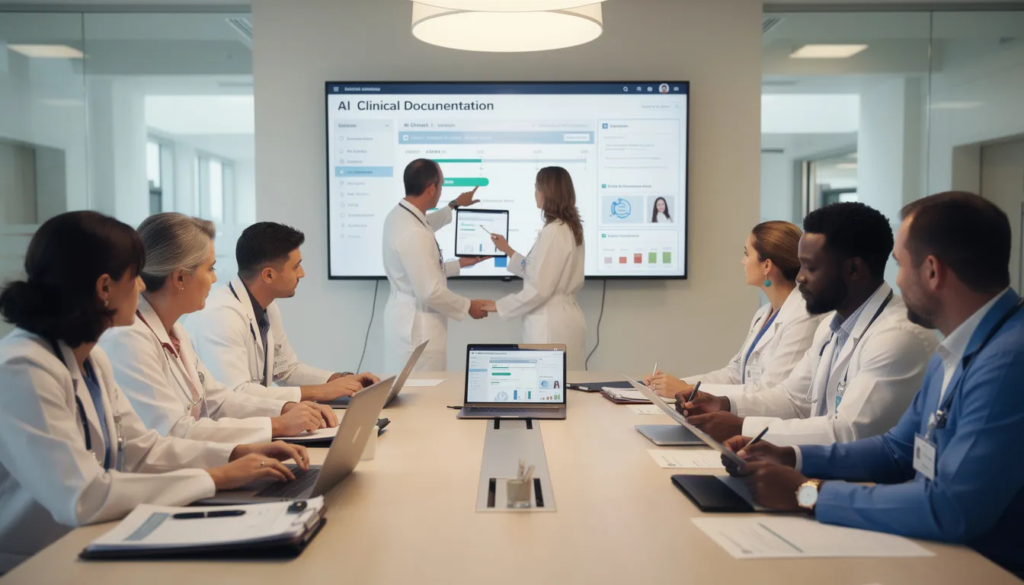
AI medical documentation systems have been successfully deployed across diverse medical specialties, each with unique documentation requirements and clinical workflows. Understanding specialty-specific applications helps healthcare providers evaluate the potential impact of AI documentation in their particular practice setting.
Primary care documentation with comprehensive SOAP note generation and preventive care tracking addresses the complex documentation needs of family medicine and internal medicine practices. Primary care physicians manage diverse patient populations with varying conditions, requiring flexible documentation systems that can adapt to different visit types, from routine preventive care to complex chronic disease management.
The AI system generates structured progress notes that include assessment of multiple conditions, medication management, and preventive care recommendations. This comprehensive approach ensures that primary care documentation supports continuity of care and meets quality reporting requirements for value-based care programs.
Oncology-specific AI trained on 3.1+ million cancer care visits provides specialized documentation capabilities for cancer treatment centers. Oncology documentation requires precise recording of treatment protocols, side effect monitoring, and complex medication regimens. AI systems trained specifically on oncology data understand the unique terminology and documentation patterns required for cancer care.
These specialized systems can automatically document chemotherapy protocols, radiation treatment plans, and multidisciplinary team discussions. The ability to accurately capture complex oncology conversations enables more precise treatment documentation and supports clinical research initiatives.
Behavioral health integration for mental health assessments and treatment planning documentation addresses the unique needs of psychiatric and psychological practice. Mental health documentation requires careful attention to patient safety, treatment planning, and regulatory compliance specific to behavioral health services.
AI systems designed for behavioral health understand the nuances of psychiatric terminology and can generate documentation that supports treatment planning, medication management, and therapeutic interventions. This capability is particularly valuable for documenting complex psychiatric evaluations and therapy sessions.
Emergency medicine support for rapid documentation in high-volume, time-sensitive environments enables emergency departments to maintain accurate documentation despite the fast-paced, high-stress clinical environment. Emergency medicine physicians often see multiple patients simultaneously and require documentation systems that can capture critical information quickly and accurately.
AI documentation in emergency settings can automatically generate discharge summaries, document procedures, and ensure that critical safety information is properly recorded even in chaotic clinical environments.
Surgery and procedural specialties benefit from pre-operative, intra-operative, and post-operative documentation capabilities. Surgical documentation requires precise recording of procedures, complications, and post-operative care plans. AI systems can assist with operative note generation, procedure coding, and post-operative follow-up documentation.
The technology’s ability to capture detailed procedural information and automatically generate structured operative reports saves significant time for surgical teams while ensuring comprehensive documentation for quality assurance and billing purposes.
Security, Compliance, and Data Protection
Healthcare organizations implementing AI medical documentation must prioritize security, compliance, and data protection to safeguard sensitive patient information and meet regulatory requirements. These considerations are fundamental to successful deployment and ongoing operation of AI documentation systems.
HIPAA compliance with end-to-end encryption for all patient data and conversation recordings ensures that sensitive health information remains protected throughout the documentation process. AI documentation systems must implement robust encryption protocols for data in transit and at rest, ensuring that patient conversations and generated documentation cannot be accessed by unauthorized parties.
Healthcare organizations require detailed documentation of security measures, including encryption standards, access controls, and audit capabilities to demonstrate HIPAA compliance during regulatory reviews. The ai tool must provide comprehensive security documentation and undergo regular security assessments to maintain compliance.
SOC 2 Type II certification and healthcare-grade security protocols for data protection provide additional assurance of security standards. This certification demonstrates that AI documentation vendors maintain rigorous security controls and undergo independent audits of their security practices.
Healthcare-grade security protocols include multi-factor authentication, role-based access controls, and continuous monitoring of system access and usage. These security measures protect against both external threats and internal security risks.
On-premises and cloud deployment options accommodate different organizational security requirements and IT infrastructure capabilities. Some healthcare organizations prefer on-premises deployment to maintain direct control over patient data, while others benefit from cloud-based solutions that offer scalability and reduced IT overhead.
Hybrid deployment models enable organizations to balance security requirements with operational flexibility, allowing sensitive data processing on-premises while leveraging cloud capabilities for system management and updates.
Audit trails and access controls for regulatory compliance and quality assurance monitoring provide complete visibility into system usage and documentation generation. These audit capabilities enable healthcare organizations to track who accessed patient information, when documentation was created or modified, and how AI-generated content was reviewed and approved.
Comprehensive audit trails support regulatory compliance efforts and enable quality assurance teams to monitor documentation accuracy and completeness across the organization.
Implementation and Integration Considerations
Successful implementation of AI medical documentation requires careful planning, thorough integration testing, and comprehensive training programs. Healthcare organizations must address technical, operational, and change management considerations to achieve optimal results from their AI documentation investment.
EHR compatibility with major systems including Epic, Cerner, Allscripts, and athenahealth ensures seamless integration with existing clinical workflows. AI documentation systems must integrate natively with EHR platforms to enable automatic import of generated notes, bidirectional data exchange, and workflow continuity.
Integration capabilities should include real-time data synchronization, automated code mapping, and support for custom EHR configurations. Healthcare organizations often customize their EHR systems to meet specific workflow requirements, and AI documentation systems must accommodate these customizations.
Mobile device support for iOS and Android platforms enables flexible documentation workflows that accommodate diverse clinical environments. Physicians and clinicians require access to documentation tools across different devices and locations, from hospital wards to outpatient clinics to remote consultation settings.
Mobile applications should provide full feature functionality while maintaining security standards and offline capabilities for environments with limited connectivity. The ability to capture and process documentation on mobile devices expands the utility of AI systems across different care settings.
Training requirements and adoption timelines for physician onboarding and system optimization vary depending on practice size, technical sophistication, and change management capabilities. Successful implementation requires structured training programs that address both technical system usage and workflow modifications.
Training programs should include hands-on practice sessions, workflow simulations, and ongoing support to ensure successful adoption. Healthcare organizations should plan for gradual rollout phases that allow for system optimization and user feedback before full deployment.
Cost analysis including subscription models, implementation fees, and ROI calculations helps healthcare organizations evaluate the financial impact of AI documentation systems. Total cost of ownership includes software licensing, implementation services, training costs, and ongoing support expenses.
Return on investment calculations should consider time savings, productivity improvements, and reduced staffing costs against implementation and ongoing expenses. Most healthcare organizations achieve positive ROI within 12-18 months of implementation.
Physician Adoption and User Experience
Customization capabilities that learn individual physician documentation styles and preferences are critical for user adoption and satisfaction. AI documentation systems should adapt to different physicians’ preferred documentation formats, terminology choices, and workflow patterns.
Machine learning algorithms can analyze individual physician documentation patterns and adjust AI-generated content to match preferred styles. This personalization improves accuracy and reduces the need for manual editing of AI-generated notes.
Multi-language support for diverse patient populations and international healthcare providers accommodates the linguistic diversity of modern healthcare settings. AI systems should support documentation in multiple languages and understand cultural nuances in medical communication.
Language support should extend beyond simple translation to include understanding of cultural communication patterns and medical terminology variations across different languages and regions.
User interface design focused on minimal workflow disruption and intuitive operation ensures that physicians can easily integrate AI documentation into existing practice patterns. The system should require minimal training and provide intuitive controls that don’t interfere with natural clinical workflows.
Interface design should prioritize simplicity and efficiency, with clear visual indicators of system status and easy access to key functions. Voice-activated controls enable hands-free operation that maintains focus on patient interaction.
Performance metrics tracking including documentation accuracy, time savings, and user satisfaction provides ongoing insight into system effectiveness and adoption success. Healthcare organizations should monitor key performance indicators to optimize system configuration and user training.
Regular performance reviews enable continuous improvement of AI system accuracy and user experience, ensuring that the technology continues to meet evolving clinical needs and user expectations.
Current Limitations and Challenges
While AI medical documentation offers substantial benefits, healthcare organizations must understand current limitations and challenges to set appropriate expectations and plan for successful implementation. These limitations inform decision-making and help organizations prepare for potential obstacles.
Accuracy limitations in complex medical terminology and unusual clinical scenarios represent the most significant current challenge. While AI systems achieve high accuracy rates in routine clinical conversations, they may struggle with highly technical medical terminology, rare conditions, or atypical clinical presentations.
Current AI-enabled real-time documentation assistants face moderate accuracy issues that preclude broad implementation in some clinical settings. The complexity of medical language, the need for clinical accuracy, and the high stakes associated with medical documentation mean that even small error rates can be unacceptable in clinical practice.
Healthcare organizations must implement robust quality assurance processes to review AI-generated documentation and ensure clinical accuracy. This review process should include physician oversight and correction capabilities to maintain documentation quality.
Integration challenges with legacy EHR systems and custom healthcare technology stacks can complicate implementation and limit system effectiveness. Older EHR systems may lack modern integration capabilities, requiring custom development or workflow modifications.
Healthcare organizations with highly customized IT environments may encounter compatibility issues that require additional development time and resources. These integration challenges can delay implementation and increase costs beyond initial projections.
Cost barriers for smaller practices and resource-limited healthcare organizations may limit access to AI documentation technology. Implementation costs, ongoing subscription fees, and training expenses can represent significant investments for smaller practices.
Smaller practices may benefit from software-as-a-service models that reduce upfront costs and provide access to enterprise-grade functionality without substantial capital investment. Vendor financing options and phased implementation approaches can help address cost concerns.
Physician concerns about documentation quality control and liability considerations require careful attention to change management and training. Some physicians may be reluctant to rely on AI-generated documentation due to concerns about accuracy, liability, or loss of control over clinical records.
Healthcare organizations should address these concerns through comprehensive training, clear quality assurance processes, and transparent communication about system capabilities and limitations. Physician involvement in system selection and configuration can improve acceptance and adoption.
A comprehensive end-to-end AI documentation system that can autonomously handle all aspects of clinical documentation with high accuracy has not yet been demonstrated in validated peer-reviewed implementations. This suggests that despite years of development and significant research investment, the field has not yet achieved fully autonomous, universally applicable AI documentation that can replace human judgment entirely.
Current systems provide meaningful improvements in specific documentation tasks but require ongoing human oversight and intervention to ensure clinical accuracy and completeness.
Market Leaders and Solution Providers
The AI medical documentation market includes several established providers offering different approaches and capabilities. Understanding the competitive landscape helps healthcare organizations evaluate options and select systems that best meet their specific needs and requirements.
DeepScribe’s Ambient OS serves healthcare systems with specialized oncology capabilities, offering AI-powered documentation specifically trained on cancer care workflows. The platform focuses on complex specialty documentation requirements and provides integration with major EHR systems.
DeepScribe has demonstrated particular strength in oncology documentation, with AI models trained on millions of cancer care visits. This specialization enables accurate documentation of complex treatment protocols, medication regimens, and multidisciplinary care planning typical of cancer care.
Suki’s AI assistant is trusted by 90,000+ providers across 100+ medical specialties, representing one of the largest deployments of AI documentation technology. Suki’s platform emphasizes broad specialty coverage and enterprise-grade scalability for large health systems.
The company’s extensive provider base demonstrates the scalability and reliability required for widespread clinical deployment. Suki’s multi-specialty approach enables healthcare organizations to deploy consistent documentation technology across diverse clinical departments.
Sunoh.ai’s clinical documentation platform offers multilingual support and EHR integration designed for diverse healthcare environments. The platform emphasizes global healthcare applications and cultural sensitivity in medical communication.
Sunoh.ai’s multilingual capabilities address the needs of healthcare organizations serving diverse patient populations and international healthcare providers. The platform supports documentation in multiple languages while maintaining clinical accuracy and cultural appropriateness, similar to how AI-driven business intelligence enhances decision making and operational efficiency across various industries.
WellSky’s ambient listening solution focuses on behavioral health and rehabilitation settings, providing specialized documentation capabilities for mental health and rehabilitation providers. This specialization addresses unique documentation requirements in behavioral health settings.
WellSky’s behavioral health focus enables specialized features for psychiatric evaluation, therapy session documentation, and treatment planning that meet regulatory requirements specific to mental health services.
The market continues to evolve with new entrants and expanding capabilities from established providers. Healthcare organizations should evaluate providers based on specialty expertise, integration capabilities, security standards, and demonstrated clinical outcomes rather than simply comparing feature lists.
Provider selection should consider long-term partnership potential, ongoing support capabilities, and alignment with organizational strategic goals for technology adoption and clinical workflow optimization.
Future Developments and Industry Trends
The AI medical documentation field continues to evolve rapidly, with emerging technologies and industry trends shaping the future of clinical documentation. Understanding these developments helps healthcare organizations plan for future capabilities and make strategic technology investments.
Large language model advancement is improving documentation accuracy and contextual understanding through continued training on medical literature, clinical guidelines, and diverse patient populations. Next-generation language models demonstrate enhanced ability to understand complex medical concepts and generate more accurate, contextually appropriate documentation.
These improvements include better understanding of medical terminology, improved recognition of clinical relationships, and enhanced ability to generate documentation that reflects complex clinical reasoning. As language models continue to advance, documentation accuracy and clinical relevance will continue to improve.
Expanded AI capabilities including clinical decision support and diagnostic assistance integration represent the next frontier in AI medical documentation. Future systems will move beyond simple transcription to provide intelligent clinical insights and decision support integrated with documentation workflows.
These expanded capabilities may include automatic identification of potential diagnoses, medication interaction checking, and clinical guideline compliance monitoring integrated with real-time documentation generation.
Interoperability improvements for seamless data exchange across healthcare systems and platforms will enable better care coordination and information sharing. Future AI documentation systems will support industry-standard data exchange protocols and enable seamless information sharing across different healthcare organizations.
Enhanced interoperability will support population health management, clinical research, and care coordination initiatives that require comprehensive patient information from multiple sources and healthcare providers.
Regulatory developments addressing AI liability, quality standards, and reimbursement policies for AI-assisted documentation will provide clearer guidance for healthcare organizations implementing AI documentation systems. Regulatory clarity will accelerate adoption and provide frameworks for quality assurance and liability management.
Future regulatory guidance may address questions about physician liability for AI-generated documentation, quality standards for AI documentation systems, and reimbursement policies for AI-assisted care delivery.
The integration of AI documentation with clinical decision support, population health management, and quality improvement initiatives will create comprehensive platforms that support multiple aspects of healthcare delivery beyond simple documentation.
These integrated platforms will leverage documentation data for clinical analytics, quality measurement, and population health insights that support value-based care initiatives and improved patient outcomes.
Training and certification programs for AI documentation systems will establish professional standards and ensure that healthcare providers can effectively utilize these tools while maintaining clinical responsibility and oversight.
As the technology matures, professional organizations and educational institutions will develop training curricula and certification programs that prepare healthcare providers for effective AI documentation utilization.
The future of AI medical documentation extends beyond simple efficiency improvements to fundamental transformation of how clinical information is captured, analyzed, and utilized to support patient care and healthcare system performance. Healthcare organizations that begin implementing these technologies now will be better positioned to leverage future capabilities and maintain competitive advantage in an increasingly technology-driven healthcare environment.
Conclusion
AI medical documentation represents a transformative technology that addresses one of healthcare’s most persistent challenges: the burden of clinical documentation that diverts physician attention from direct patient care. The technology has evolved from experimental concepts to practical solutions deployed in real-world clinical settings, delivering measurable improvements in documentation efficiency and physician satisfaction.
The core technologies underlying AI medical documentation—speech recognition, natural language processing, and large language models—have matured to the point where they can reliably capture and process clinical conversations with accuracy rates exceeding 98%. These systems understand medical terminology, adapt to individual physician preferences, and generate structured clinical notes that meet regulatory requirements and support quality patient care.
Healthcare organizations implementing AI documentation report significant time savings, with physicians saving 2+ hours daily and reducing EHR documentation time by 34-55%. These efficiency gains translate directly into improved patient care, reduced physician burnout, and enhanced practice productivity. The technology enables physicians to focus on what they do best—caring for patients—while intelligent automation handles routine documentation tasks.
The market offers diverse solutions tailored to different specialties and organizational needs, from primary care practices to specialized oncology centers. Leading providers have demonstrated enterprise-grade security, HIPAA compliance, and seamless EHR integration that enables smooth adoption without disrupting existing clinical workflows.
While current limitations include accuracy constraints in complex scenarios and integration challenges with legacy systems, ongoing technological advancement continues to address these concerns. The future of AI medical documentation includes expanded capabilities for clinical decision support, enhanced interoperability, and regulatory frameworks that will further accelerate adoption across the healthcare industry.
For healthcare organizations considering AI medical documentation, the key to success lies in careful evaluation of specific needs, thorough planning for implementation and training, and selection of solutions that align with organizational goals and clinical workflows. The technology represents not just an efficiency improvement but a fundamental shift toward more intelligent, automated healthcare systems that support better patient outcomes and provider satisfaction.
The time to explore AI medical documentation is now. As approximately 75% of US hospitals already use AI to process medical data, organizations that delay implementation risk falling behind in efficiency, physician satisfaction, and competitive positioning. Evaluate your current documentation workflow, assess the burden on your clinical team, and explore AI solutions that can restore focus on patient care while maintaining the comprehensive documentation essential for quality healthcare delivery.
Leave a Reply