
The healthcare industry’s digital transformation has made EMR development a critical priority for modern healthcare providers. As patient expectations evolve and regulatory requirements intensify, healthcare organizations need robust electronic medical record systems that streamline workflows, improve patient outcomes, and ensure compliance. With 85% of healthcare providers now using EMR systems and the market expected to reach $38.5 billion by 2025, understanding the development process has become essential for healthcare executives and IT decision-makers.
This comprehensive guide covers everything you need to know about EMR development, from initial planning and technology selection to implementation best practices and future trends. Whether you’re considering custom ehr software development or evaluating existing solutions, this roadmap will help you make informed decisions that align with your healthcare organization’s unique needs and long-term objectives.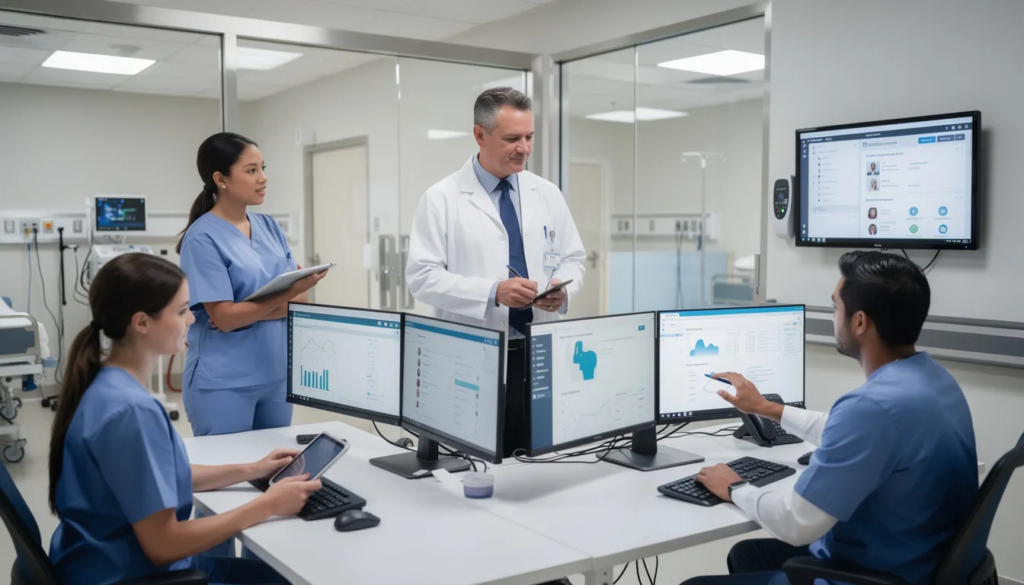
What is EMR Development and Why Healthcare Providers Need It
EMR development refers to the comprehensive process of designing, building, deploying, and maintaining software systems that capture, store, manage, and exchange digital versions of patient medical charts within healthcare facilities. Unlike simple digitization of paper records, modern electronic medical records systems integrate clinical workflows, decision support tools, and administrative functions into unified platforms that enhance care delivery and operational efficiency.
The surge in EMR adoption reflects fundamental shifts in healthcare delivery expectations. Healthcare providers increasingly recognize that electronic health records enable real-time access to patient data, reduce medical errors, and support evidence-based clinical decision making. Custom ehr software development addresses specific clinical workflows, specialty requirements, and integration needs that off-the-shelf solutions may not adequately support.
Key benefits driving EMR development include:
• Improved Patient Safety: Real-time access to complete medical histories, allergies, and medication lists reduces prescription errors and adverse events • Enhanced Clinical Productivity: Streamlined documentation, automated charge capture, and integrated order entry save significant time per patient encounter • Better Care Coordination: Seamless data exchange between healthcare professionals improves communication and reduces duplicate testing • Regulatory Compliance: Built-in compliance features help healthcare facilities meet HIPAA, meaningful use, and quality reporting requirements • Cost Reduction: Elimination of paper charts, transcription services, and manual processes generates substantial operational savings
The current market context shows strong momentum toward comprehensive EMR adoption. Healthcare systems that delay implementation risk falling behind competitors in operational efficiency, patient satisfaction, and regulatory compliance. As value-based care models expand, EMR systems become essential infrastructure for tracking outcomes, managing populations, and demonstrating quality improvements.
EMR vs EHR Development: Choosing the Right Approach
Understanding the distinction between EMR and EHR development is crucial for making informed technology decisions. While these terms are often used interchangeably, they represent different scopes of functionality and integration capabilities that significantly impact development costs, implementation complexity, and long-term value.
EMR System Development Focus
Electronic medical records systems primarily manage patient data within single healthcare facilities or practice groups. EMR software developers typically focus on internal workflows, specialty-specific documentation templates, and closed-loop processes that optimize operations within defined organizational boundaries. These systems excel at managing patient records, appointment scheduling, basic clinical decision support, and revenue cycle management for individual practices.
EHR System Development Scope
Electronic health record development encompasses broader interoperability requirements, enabling data sharing across multiple healthcare providers, health information exchanges, and regional networks. EHR systems must support standardized data formats, robust API architectures, and comprehensive security frameworks that facilitate seamless data exchange while maintaining patient privacy and data integrity.
| Aspect | EMR Systems | EHR Systems |
| Scope | Single facility/practice | Multi-provider networks |
| Development Cost | $150,000 – $400,000 | $400,000 – $1,000,000+ |
| Implementation Time | 6-12 months | 12-24 months |
| Interoperability | Limited external sharing | Comprehensive data exchange |
| Regulatory Focus | Practice-specific compliance | National/regional standards |
| Customization Level | High practice customization | Standardized workflows |
| Maintenance Complexity | Moderate | High |
Strategic Considerations for Healthcare Organizations
Most healthcare organizations now prefer EHR development for future scalability and interoperability, even if immediate needs seem limited to internal operations. EHR systems provide flexibility to participate in accountable care organizations, health information exchanges, and value-based payment models that increasingly require comprehensive data sharing capabilities.
Healthcare practice leaders should evaluate their long-term strategic goals when choosing between EMR and EHR approaches. Smaller practices with stable patient populations and minimal external referrals may find EMR systems sufficient, while larger healthcare systems, specialty practices with complex referral patterns, and organizations planning geographic expansion typically benefit from EHR investment.
The technology landscape also favors EHR development, as cloud-based platforms, standardized APIs, and modern integration frameworks reduce the historical complexity and cost barriers associated with comprehensive electronic health record systems.
Key Drivers for Custom EMR Development in 2025
Healthcare executives are prioritizing custom EMR development to address specific operational challenges and capitalize on emerging opportunities that generic solutions cannot adequately support. Research shows that 70% of healthcare executives prioritize operational efficiency gains through EMR automation, while clinical leaders focus on improving patient outcomes and reducing provider burnout.
Enhanced Clinical Decision-Making
Real-time access to comprehensive patient data transforms clinical decision-making by providing healthcare professionals with complete medical histories, current medications, allergy information, and relevant diagnostic results at the point of care. Custom EMR systems can integrate specialty-specific decision support tools, evidence-based guidelines, and predictive analytics that help clinicians identify high-risk patients and optimize treatment plans.
Vermont hospitals demonstrated the impact of well-designed EMR systems by achieving a 60% reduction in medication errors following implementation. This improvement resulted from automated drug interaction checking, allergy alerts, and dosage verification features integrated directly into prescribing workflows.
Operational Efficiency and Workflow Optimization
Custom EMR development enables healthcare organizations to optimize workflows around their specific operational requirements rather than adapting processes to fit generic software limitations. M Health Fairview saved 20 minutes per provider per day through EMR systems that streamlined documentation, automated routine tasks, and eliminated redundant data entry across multiple systems.
Key efficiency improvements include:
• Automated Documentation: Templates, smart phrases, and predictive text reduce time spent on routine notes • Integrated Order Entry: Single-point ordering for labs, imaging, medications, and referrals eliminates duplicate entry • Real-time Charge Capture: Automatic billing code suggestions and procedure documentation improve revenue cycle efficiency • Streamlined Communication: Secure messaging, task management, and care team coordination tools reduce phone calls and manual coordination
Improved Patient Outcomes and Quality Metrics
EMR systems provide the data infrastructure necessary for systematic quality improvement initiatives and population health management. Northern Light Health decreased cardiac readmissions from 9.8% to 9.1% within 18 months by implementing EMR-based care protocols, automated follow-up reminders, and risk stratification tools that identified high-risk patients for enhanced interventions.
Patient safety improvements stem from several EMR capabilities:
• Comprehensive Medication Management: Complete medication reconciliation, interaction checking, and adherence monitoring • Clinical Alert Systems: Automated notifications for abnormal lab values, missed appointments, and care gaps • Standardized Care Protocols: Built-in order sets and guidelines ensure consistent application of evidence-based practices • Performance Monitoring: Real-time dashboards and reporting tools enable continuous quality improvement
Regulatory Compliance and Reporting Efficiency
Custom EMR development ensures that healthcare organizations can meet evolving regulatory requirements efficiently while minimizing administrative burden on clinical staff. Modern EMR systems automate quality measure reporting, meaningful use attestation, and specialty-specific registry submissions that previously required manual data collection and submission processes.
The business case for custom EMR development strengthens as healthcare organizations recognize that technology investments must align with their specific patient populations, clinical specialties, and operational objectives to deliver maximum value.

EMR Development Process: 10 Essential Steps
Successful EMR development requires a systematic approach that balances technical excellence with clinical workflow optimization. This 10-step process provides a framework for managing complex development projects while ensuring that the final system meets both technical requirements and user needs.
1. Discovery and Requirements Gathering
The foundation of successful EMR development lies in comprehensive requirements gathering that captures the nuances of clinical workflows, user preferences, and organizational objectives. Development teams must conduct extensive stakeholder interviews with physicians, nurses, administrators, and support staff to understand current processes, pain points, and desired improvements.
Key activities include: • Clinical workflow analysis and documentation • User persona development for different roles and specialties • Technical requirements definition including performance, scalability, and integration needs • Regulatory and compliance requirements mapping • Future state workflow design and optimization opportunities
2. Data Migration Strategy Planning
Legacy patient data represents one of the most complex aspects of EMR development. Healthcare organizations typically maintain decades of patient records in various formats, from paper charts to multiple electronic systems. Developing a comprehensive data migration strategy ensures that historical information remains accessible while maintaining data integrity and audit trails.
Critical considerations include: • Data mapping from legacy systems to new EMR data structures • Patient identification and matching algorithms to prevent duplicate records • Incremental migration schedules that minimize operational disruption • Data validation and quality assurance processes • Rollback procedures in case migration issues arise
3. Core Module Identification and Prioritization
EMR systems encompass numerous functional modules, and successful development projects prioritize core capabilities that deliver immediate value while establishing the foundation for future enhancements. Healthcare organizations should focus initially on patient records management, appointment scheduling, e-prescribing, and basic billing functionality before adding advanced features.
Essential first-phase modules: • Patient registration and demographic management • Clinical documentation and note-taking capabilities • Medication management and e-prescribing • Laboratory and diagnostic order management • Basic reporting and quality metrics
4. Regulatory Compliance Planning
Healthcare software operates in a heavily regulated environment, and EMR development must incorporate compliance requirements from the earliest design phases. This includes HIPAA privacy and security requirements, ONC certification criteria for meaningful use, and state-specific regulations for medical records management and prescribing.
Compliance planning involves: • HIPAA risk assessment and mitigation strategies • ONC certification requirement mapping and validation • State licensing and prescribing regulation compliance • Quality reporting and registry participation planning • International compliance for organizations serving global patients
5. System Architecture Design
Modern EMR systems require robust, scalable architectures that support 24/7 availability, high transaction volumes, and seamless integration with external systems. Cloud-based microservices architectures have become the preferred approach, enabling flexible deployment, simplified maintenance, and enhanced security.
Architecture considerations include: • Cloud hosting platform selection and multi-region deployment • Microservices design for modular functionality and easier maintenance • Database architecture supporting both transactional and analytical workloads • Security architecture with encryption, access controls, and audit logging • Disaster recovery and business continuity planning
6. Technology Stack Selection
Choosing the right technology stack impacts long-term maintainability, performance, and integration capabilities. Modern EMR development favors proven technologies that support healthcare interoperability standards, provide strong security features, and enable rapid development and deployment cycles.
Recommended technology components: • Backend: Node.js, Python Django, or Java Spring Boot for API development • Database: PostgreSQL for transactional data, MongoDB for unstructured content • Frontend: React.js or Angular for web interfaces, React Native for mobile • Integration: HL7 FHIR R4 for healthcare interoperability • Security: OAuth2/OIDC for authentication, AES-256 encryption for data protection
7. User Interface and User Experience Development
EMR usability significantly impacts physician satisfaction, productivity, and patient safety. Development teams must design interfaces that present complex medical information clearly while minimizing cognitive burden and documentation time. This requires extensive user research, iterative design, and usability testing with actual healthcare professionals.
UX design priorities: • Intuitive navigation that matches clinical workflow patterns • Customizable dashboards for different roles and specialties • Smart defaults and auto-completion to reduce data entry • Mobile-responsive design for various devices and form factors • Accessibility features for users with disabilities
8. API and Integration Development
Modern healthcare delivery requires seamless integration with laboratories, pharmacies, imaging centers, health information exchanges, and other healthcare technology systems. EMR development must include comprehensive API strategies that support both current integration needs and future expansion requirements.
Integration requirements: • HL7 FHIR API development for healthcare interoperability • Laboratory interface engines for automated result delivery • E-prescribing connections to pharmacy networks • Imaging system integration for DICOM viewing and storage • Health information exchange participation for care coordination
9. Security Implementation and Testing
Healthcare data security requires multi-layered approaches that protect against both external threats and internal misuse. EMR security implementation must address encryption, access controls, audit logging, and incident response while maintaining usability and performance.
Security components: • Multi-factor authentication for all user access • Role-based access controls with principle of least privilege • Comprehensive audit logging for all data access and modifications • Data encryption in transit and at rest • Regular penetration testing and vulnerability assessments
10. Testing, Deployment, and Training
Comprehensive testing ensures that EMR systems perform reliably under real-world conditions while meeting all functional and regulatory requirements. Phased deployment strategies minimize risk while allowing for iterative improvements based on user feedback and performance monitoring.
Testing and deployment activities: • Unit testing for individual components and functions • Integration testing across all system modules and external connections • Performance testing under expected and peak load conditions • User acceptance testing with representative clinical scenarios • Phased rollout with comprehensive training and support programs
Essential EMR Development Modules and Features
Modern EMR systems require comprehensive functionality that addresses the full spectrum of healthcare delivery, from patient registration through discharge and follow-up care. Understanding essential modules and their technical requirements helps healthcare organizations prioritize development efforts and ensure that their EMR system effectively supports clinical workflows.
Patient Record Management
The core of any electronic medical record system is comprehensive patient data management that organizes clinical information around patient problems rather than chronological entries. This requires sophisticated data structures that support SOAP notes, structured templates, and standardized vocabularies like SNOMED CT for clinical concepts and LOINC for laboratory data.
Essential patient record features: • Structured Documentation: Problem-oriented medical records with discrete data elements for improved decision support and analytics • Template Management: Customizable note templates for different specialties and encounter types • Clinical Data Elements: Demographics, allergies, medications, problem lists, immunizations, and social determinants of health • Version Control: Complete audit trails showing who modified records, when, and why • Patient Summary Views: Consolidated dashboards showing active problems, current medications, recent vitals, and pending orders
E-prescribing Integration and Medication Management
Electronic prescribing capabilities must meet NCPDP SCRIPT standards while providing comprehensive drug interaction screening, formulary checking, and prior authorization management. This requires integration with national databases like RxNorm and First Databank for drug information and interaction checking.
E-prescribing functionality includes: • Prescription Writing: Structured medication orders with dose, route, frequency, and duration • Drug Interaction Checking: Real-time screening for drug-drug, drug-allergy, and drug-disease interactions • Formulary Management: Insurance-specific formulary checking with alternative medication suggestions • Prior Authorization: Automated prior authorization requests for covered medications • Prescription Monitoring: Integration with state prescription drug monitoring programs for controlled substances
Clinical Decision Support System
Effective clinical decision support goes beyond basic alerts to provide evidence-based guidance that improves care quality without overwhelming physicians with excessive notifications. This requires careful rule configuration, local customization capabilities, and performance monitoring to minimize alert fatigue.
CDS capabilities include: • Automated Alerts: Drug interactions, allergy warnings, duplicate therapy detection, and dosage range checking • Care Gap Identification: Automated screening for preventive care needs, chronic disease management, and quality measure compliance • Order Sets: Evidence-based order collections for common conditions and procedures • Clinical Guidelines: Integrated access to specialty-specific protocols and evidence-based recommendations • Risk Stratification: Predictive models for hospital readmission, sepsis, and other adverse events
Laboratory Integration and Result Management
Laboratory integration requires robust HL7 v2 messaging capabilities that support automated order transmission, result delivery, and abnormal value flagging. This includes connections to both internal laboratory systems and external reference labs that serve the healthcare organization.
Laboratory features encompass: • Order Management: Electronic laboratory orders with appropriate diagnosis codes and clinical indications • Result Integration: Automated result import with structured data elements and reference ranges • Critical Value Alerts: Immediate notification systems for life-threatening laboratory results • Trending and Graphing: Visual representation of laboratory values over time for chronic disease management • Quality Assurance: Delta checking, result verification, and laboratory performance monitoring
Appointment Scheduling and Resource Management
Sophisticated scheduling systems optimize resource utilization while improving patient access and reducing no-show rates. This requires integration with provider calendars, room scheduling, and patient communication systems to coordinate complex healthcare delivery logistics.
Scheduling functionality includes: • Multi-Provider Scheduling: Coordinated scheduling across physicians, nurses, and ancillary staff • Resource Management: Room, equipment, and facility scheduling with conflict prevention • Patient Reminders: Automated appointment reminders via phone, text, and email • Wait List Management: Automated patient notification for earlier appointment availability • No-Show Prediction: Analytics to identify high-risk patients and implement retention strategies
Revenue Cycle Management Integration
EMR systems must support comprehensive revenue cycle management through integrated charge capture, coding assistance, and claims processing. This requires deep integration with billing systems and understanding of complex healthcare reimbursement rules.
Revenue cycle features include: • Automated Charge Capture: Procedure and diagnosis code suggestions based on clinical documentation • ICD-10 and CPT Coding: Integrated coding assistance with clinical decision support for accurate documentation • Claims Processing: Electronic claim generation and submission with real-time eligibility verification • Denial Management: Automated denial tracking and appeals processing • Financial Analytics: Revenue cycle performance monitoring and optimization recommendations
Patient Portal and Engagement Tools
Patient portals extend EMR functionality to engage patients in their care while reducing administrative burden on healthcare staff. This requires careful attention to privacy controls, user experience design, and integration with clinical workflows.
Patient portal capabilities: • Secure Messaging: HIPAA-compliant communication between patients and healthcare teams • Appointment Management: Online scheduling, cancellation, and rescheduling capabilities • Test Results Access: Patient-friendly presentation of laboratory and imaging results • Medication Management: Prescription refill requests and medication adherence tracking • Health Information Access: Personal health records, visit summaries, and educational resources
Specialty-Specific EMR Development Considerations
Different medical specialties require unique EMR functionality that reflects their specific workflows, documentation requirements, and regulatory obligations. Understanding these specialty needs is crucial for custom ehr software development that truly supports clinical practice.
Cardiology EMR Requirements: • ECG integration with automated interpretation and comparison capabilities • Cardiac catheterization documentation with hemodynamic measurements and intervention tracking • Heart failure monitoring with fluid balance, weight trends, and medication titration protocols • Implantable device management with follow-up scheduling and remote monitoring integration
Orthopedics EMR Functionality: • Advanced imaging integration supporting DICOM viewing and measurement tools • Surgical planning templates with procedure-specific documentation requirements • Laterality tracking with automatic verification to prevent wrong-site surgery • Outcome measurement tools for joint replacement and sports medicine procedures
Oncology EMR Capabilities: • Chemotherapy protocol management with dose calculation and modification tracking • Treatment regimen documentation supporting complex multi-drug therapies • Survivorship care planning with long-term follow-up scheduling and screening reminders • Clinical trial integration for patient enrollment and data collection
OB/GYN EMR Features: • Prenatal care tracking with gestational age calculation and risk assessment • Labor and delivery documentation with real-time monitoring integration • Trimester-specific care protocols with automated screening and testing reminders • Contraception counseling tools with method comparison and side effect tracking
Mental Health EMR Considerations: • Enhanced privacy controls for sensitive behavioral health information • Substance abuse documentation with special protection requirements • Therapy session documentation with progress tracking and outcome measurement • Crisis intervention protocols with emergency contact and safety planning tools
These specialty-specific requirements demonstrate why many healthcare organizations choose custom EMR development over generic solutions that may not adequately support their unique clinical workflows and documentation needs.
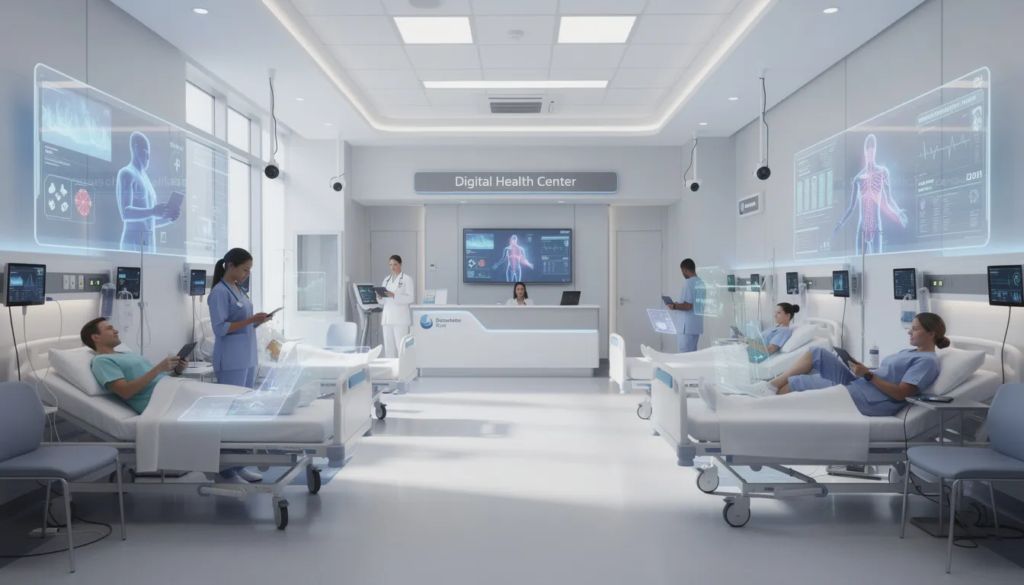
EMR Development Compliance and Regulatory Requirements
Healthcare software operates within a complex regulatory environment that significantly impacts EMR development decisions, architecture choices, and ongoing operations. Understanding and implementing comprehensive compliance measures is essential for protecting patient data, ensuring system reliability, and maintaining legal authorization to operate healthcare technology systems.
HIPAA Compliance Requirements
The Health Insurance Portability and Accountability Act (HIPAA) establishes comprehensive privacy and security standards for protected health information (PHI) that must be embedded throughout EMR development. HIPAA compliance is not optional—it’s a legal requirement that affects every aspect of system design, implementation, and operation.
HIPAA Privacy Rule Implementation: • Minimum necessary standards for PHI access and disclosure • Patient consent and authorization management systems • Accounting of disclosures with comprehensive audit trails • Individual access rights including data portability and correction capabilities • Breach notification procedures with automated incident response workflows
HIPAA Security Rule Technical Safeguards: • Access control with unique user identification and automatic logoff features • Audit controls capturing all PHI access and modification activities • Integrity controls preventing unauthorized PHI alteration or destruction • Person authentication through multi-factor authentication systems • Transmission security with end-to-end encryption for all data transfers
Healthcare organizations must also implement Business Associate Agreements (BAAs) with all third-party vendors, cloud service providers, and contractors who may access PHI. This includes EMR software vendors, hosting providers, backup services, and integration partners.
ONC Health IT Certification Program
The Office of the National Coordinator for Health Information Technology (ONC) Health IT Certification Program establishes technical standards and capabilities that EMR systems must demonstrate to qualify for federal incentive programs and meet meaningful use requirements.
ONC Certification Criteria Include: • Clinical Quality Measures (CQMs) calculation and reporting capabilities • Computerized Provider Order Entry (CPOE) for medications, laboratory tests, and diagnostic imaging • Drug-drug and drug-allergy interaction checking with override capabilities • Electronic prescribing with formulary and benefit checking integration • Patient engagement tools including secure messaging and appointment scheduling
2015 Edition Cures Update Requirements: • Application Programming Interfaces (APIs) supporting patient data access and third-party applications • Export functionality enabling complete patient data extraction • Electronic Health Information (EHI) export without special effort • Real-world testing programs demonstrating ongoing interoperability performance
21st Century Cures Act Compliance
The 21st Century Cures Act introduces significant new requirements for patient data access, interoperability, and information blocking prevention. These requirements fundamentally change how EMR systems must handle data sharing and patient access requests.
Cures Act Information Blocking Provisions: • Prohibition against practices that interfere with patient data access or sharing • Required support for standardized APIs enabling third-party application access • Patient access to electronic health information without special effort • Healthcare provider obligations to provide timely access to patient data
Patient Access Requirements: • Real-time access to test results, clinical notes, and other health information • Standardized API implementation supporting SMART on FHIR applications • Cost transparency for patient access to their own health information • Data portability enabling patients to transfer information between providers
State-Specific Regulatory Requirements
EMR development must accommodate varying state regulations covering medical records management, controlled substance prescribing, and specialty-specific practice requirements. These regulations can significantly impact system functionality and user workflows.
Common State Requirements: • Medical records retention periods ranging from 7-30 years depending on patient age and state law • Controlled substance prescribing integration with state Prescription Drug Monitoring Programs (PDMPs) • Telemedicine licensing and practice requirements for multi-state healthcare organizations • Professional licensing verification for prescribing privileges and scope of practice
Specialty-Specific State Regulations: • Mental health privacy protections beyond HIPAA requirements • Substance abuse treatment documentation with enhanced confidentiality measures • Reproductive health information with additional consent and confidentiality protections • Laboratory result reporting to state health departments for communicable disease surveillance
International Standards and Global Compliance
Healthcare organizations serving international patients or operating across borders must address additional regulatory requirements and data protection standards that impact EMR development and deployment strategies.
General Data Protection Regulation (GDPR) for European Patients: • Enhanced patient consent management with granular control over data use • Right to be forgotten with technical mechanisms for data deletion • Data portability requirements enabling patient data transfer between providers • Privacy by design principles embedded throughout system architecture
Health Canada Digital Health Requirements: • Medical device licensing for clinical decision support software • Personal health information protection legislation varying by province • Interoperability standards for provincial health information systems • French language support requirements for Quebec healthcare providers
ISO 27001 Information Security Management: • Comprehensive information security management systems with documented policies and procedures • Risk assessment and treatment processes for all information assets • Incident response procedures with defined escalation and notification requirements • Continuous improvement processes with regular security assessment and audit cycles
Understanding and implementing these diverse regulatory requirements requires ongoing compliance monitoring, regular system updates, and comprehensive documentation of all security and privacy measures. Healthcare organizations should work with legal counsel and compliance experts to ensure their EMR development projects meet all applicable requirements while supporting efficient clinical workflows.
EMR Development Technology Stack and Architecture
Modern EMR development requires careful technology selection and architectural planning to ensure scalability, security, and interoperability while supporting the complex requirements of healthcare delivery. The technology stack decisions made during EMR development significantly impact long-term maintenance costs, performance characteristics, and ability to integrate with emerging healthcare technologies.
Cloud-Based Architecture Advantages
Cloud-based EMR architectures have become the preferred approach for healthcare organizations seeking scalability, reliability, and cost-effective infrastructure management. Cloud platforms provide built-in disaster recovery, automatic scaling, and geographic distribution capabilities that are difficult and expensive to replicate in on-premises environments.
Key Cloud Architecture Benefits: • Elastic Scalability: Automatic resource scaling to handle varying patient loads and peak usage periods • Geographic Distribution: Multi-region deployment for improved performance and disaster recovery • Managed Services: Database management, backup services, and security monitoring handled by cloud providers • Cost Optimization: Pay-as-you-use pricing models reducing upfront capital investment • Compliance Support: Cloud platforms offering HIPAA-compliant infrastructure and security controls
Leading cloud platforms like Amazon Web Services (AWS), Microsoft Azure, and Google Cloud Platform provide healthcare-specific services and compliance certifications that simplify EMR deployment while ensuring regulatory compliance.
Microservices Architecture for EMR Systems
Microservices architectures enable modular EMR development by decomposing complex functionality into discrete, independently deployable services. This approach improves maintainability, enables technology diversity, and supports gradual system evolution without requiring complete platform replacement.
EMR Microservices Components: • Patient Management Service: Demographics, registration, and identity management • Clinical Documentation Service: Notes, templates, and structured data capture • Order Management Service: Laboratory, imaging, and medication ordering • Results Management Service: Test results, reports, and notification handling • Billing Service: Charge capture, coding, and revenue cycle management • Integration Service: HL7 FHIR APIs and external system connections
Microservices Architecture Advantages: • Independent scaling of high-demand services like patient lookup and clinical documentation • Technology diversity enabling best-of-breed solutions for specific functional areas • Fault isolation preventing single component failures from affecting entire system • Simplified maintenance with smaller, focused development teams for each service • Gradual modernization enabling legacy system replacement over time
Healthcare Interoperability Standards
EMR systems must implement comprehensive interoperability standards to participate in modern healthcare delivery networks. HL7 FHIR R4 has emerged as the primary standard for healthcare API development, providing standardized resource definitions and RESTful interfaces for health information exchange.
HL7 FHIR Implementation Requirements: • Core Resources: Patient, Practitioner, Organization, Encounter, Observation, and MedicationRequest resources • US Core Profiles: Standardized constraints and extensions for US healthcare requirements • SMART on FHIR: OAuth2-based authorization framework enabling third-party application integration • Bulk Data Export: Efficient data extraction for analytics, reporting, and patient access requirements • Clinical Quality Language (CQL): Standardized logic representation for clinical decision rules and quality measures
Integration Architecture Patterns: • API Gateway for managing external integrations and rate limiting • Event-driven messaging for real-time notifications and workflow triggers • Data synchronization services for maintaining consistency across integrated systems • Transformation engines for mapping between different data formats and standards
Database Technologies for Healthcare Data
Healthcare data management requires sophisticated database architectures that support both transactional integrity for clinical operations and analytical performance for reporting and quality improvement initiatives.
Recommended Database Technologies:
PostgreSQL for Transactional Data: • ACID compliance ensuring data integrity for critical clinical information • Advanced indexing and query optimization for complex healthcare queries • JSON support for flexible data structures like clinical notes and structured assessments • Robust backup and point-in-time recovery for regulatory compliance requirements
MongoDB for Unstructured Content: • Document storage for clinical notes, imaging reports, and PDF attachments • Flexible schema supporting evolving documentation templates and specialty requirements • Geographic distribution for multi-site healthcare organizations • Full-text search capabilities for clinical documentation retrieval
Redis for Caching and Session Management: • In-memory caching for frequently accessed patient data and lookup tables • Session management for web-based EMR applications • Real-time data structures for clinical dashboards and alert systems • Pub/sub messaging for real-time notifications and system integration
Frontend Technologies and User Experience
EMR user interfaces must balance information density with usability while supporting diverse user roles and clinical workflows. Modern frontend frameworks enable responsive design, offline capabilities, and integration with mobile devices that clinicians increasingly use for patient care.
Frontend Technology Recommendations:
React.js or Angular for Web Applications: • Component-based architecture enabling reusable UI elements across different EMR modules • Virtual DOM for performance optimization with complex clinical dashboards • Rich ecosystem of healthcare-specific components and libraries • Progressive Web App (PWA) capabilities for offline access and mobile optimization
React Native for Mobile Applications: • Cross-platform development reducing costs for iOS and Android applications • Native performance for clinical workflows requiring responsive touch interfaces • Integration with device capabilities like cameras for wound documentation and barcode scanning • Offline synchronization for use in areas with limited network connectivity
User Experience Design Principles: • Clinical workflow optimization with minimal clicks and intuitive navigation • Role-based dashboards customized for physicians, nurses, and administrative staff • Accessibility compliance supporting users with disabilities and diverse technical skills • Responsive design supporting tablets, smartphones, and traditional desktop workstations
Security Frameworks and Implementation
Healthcare data security requires comprehensive, multi-layered approaches that address authentication, authorization, data protection, and audit logging while maintaining usability for clinical workflows.
Authentication and Authorization:
OAuth2 and OpenID Connect (OIDC): • Standardized authentication protocols supporting single sign-on (SSO) across healthcare applications • Token-based authentication enabling secure API access for mobile and web applications • Integration with healthcare identity providers and multi-factor authentication systems • Support for emergency access procedures required in clinical environments
Role-Based Access Control (RBAC): • Granular permissions based on job roles, departments, and clinical responsibilities • Dynamic access control supporting temporary assignments and cross-coverage situations • Break-glass emergency access with comprehensive audit logging and approval workflows • Attribute-based access control for sensitive data categories like behavioral health information
Data Protection and Encryption:
AES-256 Encryption: • Data at rest encryption for all patient information stored in databases and file systems • Data in transit encryption using TLS 1.3 for all network communications • Key management systems with regular key rotation and secure key storage • Field-level encryption for highly sensitive data elements like Social Security numbers
The technology stack selection and architectural decisions made during EMR development establish the foundation for long-term system evolution, performance, and security. Healthcare organizations should prioritize proven technologies with strong healthcare industry adoption while ensuring flexibility for future enhancements and integration requirements.
EMR Development Costs and Budget Planning
Understanding the comprehensive costs associated with EMR development enables healthcare organizations to make informed investment decisions and plan realistic budgets that account for both initial development expenses and ongoing operational costs. EMR development costs vary significantly based on system complexity, customization requirements, and implementation scope.
Development Cost Ranges by System Complexity
EMR development costs depend heavily on the scope of functionality, customization level, and integration requirements. Healthcare organizations should understand these cost ranges to establish realistic budget expectations and evaluate different development approaches.
Basic EMR System Development ($150,000 – $400,000): • Core patient registration and demographic management • Basic clinical documentation with template support • Essential e-prescribing functionality • Simple appointment scheduling system • Basic reporting capabilities • Limited third-party integrations
Intermediate EMR Platform Development ($400,000 – $700,000): • Comprehensive clinical documentation with specialty templates • Advanced clinical decision support with customizable rules • Laboratory and imaging integration • Patient portal with secure messaging • Revenue cycle management integration • HL7 FHIR API development for basic interoperability
Advanced EMR System Development ($700,000 – $1,000,000+): • Comprehensive specialty-specific workflows and documentation • Advanced analytics and population health management • Extensive third-party integration ecosystem • Mobile applications for clinicians and patients • Advanced security features and compliance automation • Machine learning and AI-powered clinical decision support
Enterprise EMR Platform Development ($1,000,000+): • Multi-facility support with centralized and local customization • Comprehensive interoperability with health information exchanges • Advanced workflow automation and business process management • Real-time analytics and predictive modeling capabilities • Extensive API ecosystem supporting third-party innovation • Global deployment capabilities with multi-language support
Implementation and Deployment Costs
Beyond core development expenses, healthcare organizations must budget for implementation costs that often equal or exceed the initial software development investment. Industry data shows that multi-physician practices average $162,000 in implementation costs plus $85,500 in first-year maintenance expenses.
Implementation Cost Components:
Data Migration Services ($25,000 – $150,000): • Legacy system analysis and data mapping • Patient record conversion and quality assurance • Historical data validation and cleanup • Incremental migration planning and execution • Rollback procedures and contingency planning
Training and Change Management ($40,000 – $200,000): • Physician and clinical staff training programs • Administrative user training and certification • Super-user development and ongoing support • Change management consulting and workflow optimization • Ongoing education and competency assessment programs
Infrastructure and Hosting ($15,000 – $100,000 annually): • Cloud hosting platform costs and data storage • Network connectivity and bandwidth upgrades • Backup and disaster recovery services • Security monitoring and incident response capabilities • Performance monitoring and optimization tools
Third-Party Integration Costs ($30,000 – $200,000): • Laboratory interface development and testing • Pharmacy network connections for e-prescribing • Imaging system integration and DICOM viewing • Health information exchange participation • Billing system integration and revenue cycle optimization
Development Team Costs and Resource Planning
EMR development requires multidisciplinary teams with healthcare domain expertise, technical skills, and regulatory knowledge. Understanding team composition and hourly rates helps organizations plan realistic development timelines and resource requirements.
Core Development Team Roles:
Project Management and Clinical Informatics ($100 – $200/hour): • Project managers with healthcare IT experience • Clinical informaticists understanding healthcare workflows • Quality assurance specialists with regulatory compliance expertise • Business analysts skilled in healthcare process optimization
Software Development Team ($80 – $180/hour): • Full-stack developers with healthcare integration experience • Database architects understanding healthcare data models • UI/UX designers specializing in clinical workflow optimization • DevOps engineers with healthcare security and compliance expertise
Specialty Consultants ($150 – $300/hour): • Healthcare regulatory compliance attorneys • HIPAA security and privacy specialists • Clinical workflow optimization consultants • Healthcare interoperability and integration experts
Typical Development Timeline and Resource Requirements: • 6-8 month timeline for basic EMR systems with 5-6 person development team • 12-18 month timeline for intermediate platforms with 8-10 person development team • 18-24 month timeline for advanced systems with 12+ person development team • 24+ month timeline for enterprise platforms with distributed development teams
Ongoing Operational and Maintenance Costs
EMR systems require continuous investment in maintenance, updates, security monitoring, and compliance management. Healthcare organizations should budget approximately 15-20% of initial development costs annually for ongoing system maintenance and enhancement.
Annual Operational Cost Categories:
System Maintenance and Updates ($1,200+ per user annually): • Software updates and bug fixes • Security patches and vulnerability remediation • Performance optimization and capacity planning • Regulatory compliance updates and certification maintenance • Feature enhancements and workflow improvements
Technical Support and Help Desk ($500 – $1,500 per user annually): • 24/7 technical support for critical healthcare operations • User training and competency development programs • System administration and configuration management • Incident response and problem resolution services • User community management and knowledge sharing platforms
Compliance and Security Services ($50,000 – $200,000 annually): • Regular security assessments and penetration testing • HIPAA compliance auditing and risk assessment • Regulatory reporting and certification maintenance • Legal compliance monitoring and policy updates • Business continuity planning and disaster recovery testing
Return on Investment Analysis and Timelines
Healthcare organizations typically see positive EMR returns within 18-24 months through operational efficiencies, improved billing capture, and reduced administrative costs. Understanding ROI calculations helps justify EMR investments and establish realistic performance expectations.
Primary ROI Sources:
Operational Efficiency Gains: • Reduced transcription costs: $15,000 – $50,000 annually per physician • Improved billing capture: 2-5% increase in collections through better documentation • Reduced administrative time: 15-30 minutes per patient encounter savings • Eliminated paper and storage costs: $10,000 – $25,000 annually per physician
Quality and Safety Improvements: • Reduced medication errors and associated liability costs • Improved preventive care delivery and quality bonus payments • Enhanced chronic disease management and outcome improvements • Reduced duplicate testing and unnecessary procedures
Strategic Value Creation: • Participation in value-based payment models requiring comprehensive data reporting • Enhanced patient satisfaction and competitive positioning • Improved recruitment and retention of technology-savvy healthcare professionals • Foundation for advanced analytics and population health management initiatives
EMR development represents a significant investment, but organizations that plan comprehensively and execute effectively typically achieve substantial returns through improved efficiency, enhanced care quality, and strategic positioning for future healthcare delivery models.
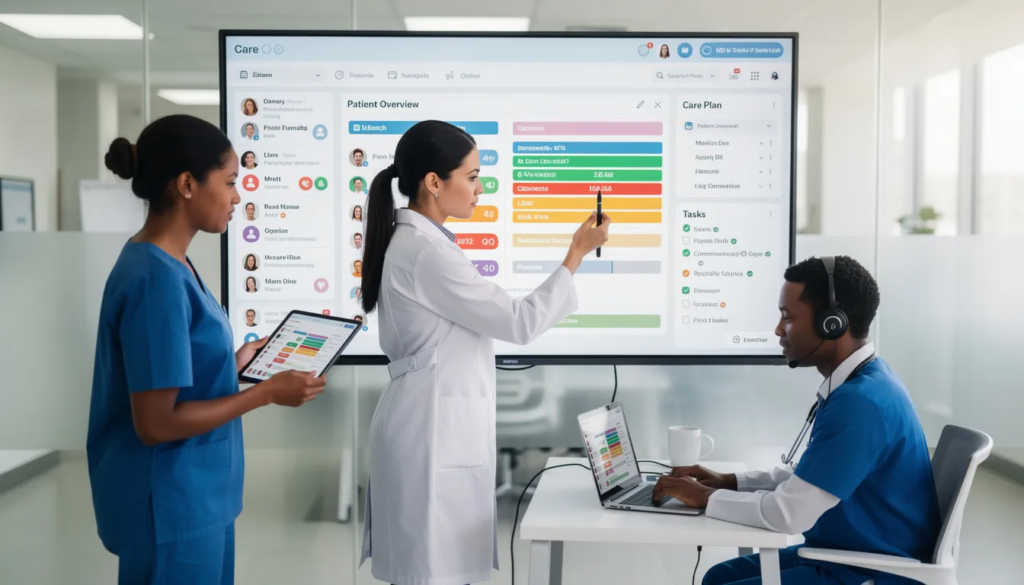
EMR Development Best Practices and Common Pitfalls
Successful EMR development requires careful attention to proven best practices while avoiding common mistakes that can derail projects, inflate costs, and compromise user adoption. Learning from industry experience helps healthcare organizations navigate complex development challenges and achieve better outcomes.
Start with MVP Approach and Iterative Development
Many EMR development projects fail because they attempt to build comprehensive functionality immediately rather than focusing on core clinical workflows that deliver immediate value. The Minimum Viable Product (MVP) approach enables healthcare organizations to deploy functional systems quickly while gathering user feedback for iterative improvements.
MVP Development Strategy: • Phase 1: Patient registration, basic clinical documentation, and essential e-prescribing capabilities • Phase 2: Laboratory integration, clinical decision support, and appointment scheduling optimization • Phase 3: Advanced reporting, patient portal, and specialty-specific workflow enhancements • Phase 4: Analytics, population health management, and AI-powered decision support tools
Iterative Development Benefits: • Faster time-to-value with immediate operational improvements • User feedback integration enabling better long-term design decisions • Reduced project risk through incremental validation and course correction • Lower upfront investment with gradual expansion based on proven value
Healthcare organizations using MVP approaches typically achieve 40-60% faster deployment times while maintaining higher user satisfaction scores compared to comprehensive “big bang” implementations.
Involve End-Users Throughout Development Process
EMR systems succeed or fail based on user adoption, making early and continuous involvement of healthcare professionals essential for development success. Organizations that engage physicians, nurses, and administrative staff throughout the development process achieve significantly higher adoption rates and user satisfaction scores.
User Engagement Strategies:
Clinical Champion Programs: • Identify respected physicians and nurses to participate in design decisions • Establish regular design review sessions with clinical stakeholders • Create super-user programs that bridge clinical practice and technical implementation • Develop clinical advisory committees with decision-making authority over workflow design
Workflow Analysis and Optimization: • Conduct detailed observation of current clinical workflows before system design • Document time-and-motion studies to identify efficiency improvement opportunities • Map existing processes to proposed EMR workflows with gap analysis • Design customization options that accommodate different practice styles and preferences
Usability Testing and Feedback Integration: • Regular usability testing sessions with representative clinical scenarios • Prototype testing with actual patient data in controlled environments • Feedback collection mechanisms built into EMR interfaces for ongoing improvement • Rapid iteration cycles incorporating user suggestions and addressing pain points
Organizations that invest heavily in user engagement during development typically see 65-80% faster adoption rates and 35-50% higher long-term user satisfaction compared to technology-driven implementations.
Plan Data Migration Early with Comprehensive Testing
Data migration represents one of the highest-risk aspects of EMR development, and inadequate planning often leads to project delays, data quality issues, and user frustration. Successful organizations begin data migration planning during the early design phases rather than treating it as an implementation afterthought.
Data Migration Best Practices:
Early Assessment and Planning: • Comprehensive inventory of legacy systems, data formats, and data quality issues • Patient identification and record matching strategies to prevent duplicate records • Data mapping documentation showing how legacy data elements translate to new EMR structures • Migration timeline coordination with clinical operations and go-live planning
Quality Assurance and Validation: • Automated data validation rules checking for completeness, consistency, and accuracy • Sample data migration testing with comprehensive review by clinical staff • Reconciliation procedures comparing legacy and migrated data for accuracy verification • Rollback procedures and contingency plans for migration failures or data quality issues
Incremental Migration Strategies: • Phased migration starting with less critical data elements and building to comprehensive records • Parallel system operation periods allowing for data validation and user training • Historical data migration schedules that minimize disruption to current patient care • Real-time data synchronization capabilities during transition periods
Avoid Over-Customization and Feature Creep
While customization enables EMR systems to match organizational workflows, excessive customization creates maintenance burdens, complicates upgrades, and increases long-term costs. Successful organizations balance customization with standardization to achieve workflow optimization without sacrificing maintainability.
Customization Management Strategies:
Configuration vs. Customization: • Prioritize configurable options over code modifications whenever possible • Document business justification for all customization requests • Establish governance processes for evaluating and approving customization requests • Regular review cycles assessing customization value and maintenance costs
Standard Workflow Adoption: • Evaluate opportunities to improve existing workflows rather than replicating inefficient processes • Benchmark workflows against industry best practices and evidence-based guidelines • Change management programs helping staff adapt to improved workflow designs • Measurement programs tracking efficiency gains from workflow standardization
Feature Prioritization and Scope Management: • Regular stakeholder review of feature requests with business value assessment • Technology roadmap planning that balances new features with maintenance and stability • User feedback analysis identifying highest-impact enhancement opportunities • Budget allocation protecting core functionality while enabling strategic enhancements
Implement Robust Testing and Quality Assurance
Healthcare software requires more comprehensive testing than typical business applications due to patient safety implications and regulatory requirements. Successful EMR development incorporates multiple testing phases with both automated and manual validation procedures.
Comprehensive Testing Strategy:
Functional and Integration Testing: • Unit testing for individual EMR modules and functions • Integration testing across all system components and external interfaces • End-to-end testing with realistic clinical scenarios and patient data • Performance testing under expected and peak load conditions • Security testing including penetration testing and vulnerability assessment
Clinical Scenario Testing: • Test cases based on actual patient encounters and clinical workflows • Emergency scenario testing ensuring system availability during critical situations • Edge case testing with unusual patient conditions and complex clinical situations • Medication interaction testing with comprehensive drug database validation • Clinical decision support testing ensuring appropriate alerts and recommendations
User Acceptance and Training Validation: • Clinical staff testing with representative patient care scenarios • Administrative workflow testing covering registration, scheduling, and billing processes • Training effectiveness measurement ensuring competency before go-live • Simulation testing in controlled environments mimicking production conditions
Plan Phased Rollout with Comprehensive Support
EMR implementations that attempt organization-wide deployment simultaneously often experience significant disruption and user resistance. Phased rollout strategies enable gradual adoption while providing adequate support and allowing for iterative improvements based on early user experience.
Phased Deployment Strategies:
Department-by-Department Rollout: • Start with departments most ready for change and likely to achieve quick wins • Build momentum and expertise before expanding to more complex or resistant departments • Cross-departmental coordination ensuring seamless patient care during transition periods • Success measurement and optimization before expanding deployment scope
Feature-by-Feature Implementation: • Deploy core functionality first with gradual addition of advanced features • User competency development with manageable learning curves • System stability validation before adding complexity • Feedback integration and system optimization between implementation phases
Comprehensive Support Infrastructure: • 24/7 technical support during initial deployment periods • On-site super-users providing immediate assistance and training reinforcement • Regular check-in meetings addressing user concerns and identifying improvement opportunities • Continuous training programs ensuring ongoing competency development
Organizations using phased rollout strategies typically report 50-70% fewer implementation problems and achieve 30-40% faster time to full user proficiency compared to simultaneous organization-wide deployments.
EMR implementations that attempt organization-wide deployment simultaneously often experience significant disruption and user resistance. Phased rollout strategies enable gradual adoption while providing adequate support and allowing for iterative improvements based on early user experience. Phased Deployment Strategies: Department-by-Department Rollout: • Start with departments most ready for change and likely to achieve quick wins • Build momentum and expertise before expanding to more complex or resistant departments • Cross-departmental coordination ensuring seamless patient care during transition periods • Success measurement and optimization before expanding deployment scope Feature-by-Feature Implementation: • Deploy core functionality first with gradual addition of advanced features • User competency development with manageable learning curves • System stability validation before adding complexity • Feedback integration and system optimization between implementation phases Comprehensive Support Infrastructure: • 24/7 technical support during initial deployment periods • On-site super-users providing immediate assistance and training reinforcement • Regular check-in meetings addressing user concerns and identifying improvement opportunities • Continuous training programs ensuring ongoing competency development Organizations using phased rollout strategies typically report 50-70% fewer implementation problems and achieve 30-40% faster time to full user proficiency compared to simultaneous organization-wide deployments.
Understanding common EMR development mistakes helps organizations proactively address risks and improve project success rates.
Technical Pitfalls: • Underestimating integration complexity with legacy systems and external partners • Inadequate security planning resulting in compliance violations or data breaches • Poor performance optimization leading to slow response times and user frustration • Insufficient backup and disaster recovery planning risking data loss and system availability
Organizational Pitfalls: • Inadequate change management resulting in user resistance and poor adoption • Insufficient training budgets and timelines compromising user competency • Poor communication strategies creating uncertainty and resistance among staff • Unrealistic timeline expectations leading to rushed implementations and quality compromises
Clinical Pitfalls: • Replicating inefficient paper-based workflows rather than optimizing for digital capabilities • Inadequate clinical decision support resulting in missed safety and quality opportunities • Poor integration with clinical workflows disrupting patient care delivery • Insufficient attention to specialty-specific requirements compromising clinical effectiveness
By following proven best practices and avoiding common pitfalls, healthcare organizations can significantly improve their EMR development success rates while achieving better clinical outcomes and user satisfaction.
Future Trends in EMR Development
The healthcare technology landscape continues evolving rapidly, with emerging technologies and changing care delivery models reshaping EMR development priorities. Understanding these trends helps healthcare organizations make strategic technology investments that position them for future success while avoiding premature adoption of unproven technologies.
Artificial Intelligence Integration and Clinical Decision Support
AI technologies are transforming EMR capabilities beyond traditional rule-based clinical decision support to include predictive analytics, natural language processing, and machine learning-powered insights. These advances promise to reduce physician documentation burden while improving diagnostic accuracy and care quality.
Current AI Applications in EMR Development:
Predictive Analytics for Clinical Risk Assessment: • Sepsis prediction models analyzing vital signs, laboratory values, and clinical notes to identify high-risk patients 2-6 hours earlier than traditional methods • Hospital readmission risk scores incorporating social determinants of health, medication adherence patterns, and historical utilization data • Fall risk assessment combining mobility data, medication effects, and environmental factors for proactive prevention strategies • Pressure ulcer risk prediction enabling targeted prevention protocols for vulnerable patients
Natural Language Processing for Documentation: • Automated clinical note generation from physician dictation with structured data extraction for billing and quality reporting • Voice recognition systems reducing documentation time by 40-60% while maintaining accuracy and clinical detail • Clinical concept extraction from free-text notes enabling retrospective analysis and research applications • Automated coding assistance suggesting ICD-10 and CPT codes based on clinical documentation content
Machine Learning for Personalized Care Recommendations: • Drug dosing optimization based on patient-specific factors including genetics, kidney function, and concurrent medications • Treatment pathway recommendations incorporating patient preferences, clinical guidelines, and outcome data • Diagnostic imaging interpretation assistance with anomaly detection and measurement automation • Population health management with patient stratification and targeted intervention recommendations
Voice Recognition and Natural Language Processing
Voice technology integration represents one of the most promising opportunities for reducing EMR documentation burden while improving data quality and physician satisfaction. Advanced voice recognition systems now achieve 95%+ accuracy while supporting medical terminology and specialty-specific vocabulary.
Voice Technology Applications:
Hands-Free Documentation: • Real-time voice-to-text conversion during patient encounters with automatic punctuation and formatting • Voice-activated navigation through EMR screens and patient records • Dictation-based order entry for medications, laboratory tests, and imaging studies • Voice-controlled clinical decision support query and response systems
Ambient Clinical Documentation: • Room-based voice capture systems automatically generating clinical notes from patient-physician conversations • Smart speaker integration with EMR systems for hands-free information retrieval and documentation • Multi-speaker recognition enabling team-based documentation in complex clinical scenarios • Privacy-preserving voice processing with local encryption and secure transmission to EMR systems
Multilingual Support and Accessibility: • Real-time translation services enabling care delivery to non-English speaking patients • Voice recognition accommodation for physicians with accents and speech variations • Accessibility features supporting physicians with physical disabilities or mobility limitations • Integration with hearing aid and assistive technology devices for enhanced usability
Blockchain Technology for Data Security and Interoperability
Blockchain technology offers promising solutions for healthcare data sharing challenges, particularly around patient identity management, consent verification, and secure data exchange across organizational boundaries. While still emerging, blockchain applications in EMR development are gaining traction for specific use cases.
Blockchain Use Cases in Healthcare:
Patient Identity and Consent Management: • Decentralized patient identity verification reducing duplicate records and identity theft risks • Smart contracts for automated consent management with granular control over data sharing permissions • Immutable audit trails for data access and sharing activities improving compliance and transparency • Cross-organizational patient matching and record linking without compromising privacy
Secure Health Information Exchange: • Cryptographically secured data sharing between healthcare providers with tamper-evident records • Pharmaceutical supply chain tracking for medication authenticity and safety verification • Medical device data integrity ensuring authentic sensor data and preventing tampering • Research data sharing with privacy-preserving mechanisms and attribution tracking
Healthcare Provider Credentialing: • Immutable professional licensing and certification records reducing verification time and costs • Peer review and outcome tracking for continuous professional development and quality improvement • Medical malpractice and safety event recording with privacy-preserving mechanisms • Multi-institutional collaboration with verified professional credentials and competency tracking
Internet of Medical Things (IoMT) Integration
The proliferation of connected medical devices, wearables, and sensors creates new opportunities for continuous patient monitoring and real-time health data collection. EMR development must accommodate diverse device ecosystems while ensuring data quality and clinical relevance.
IoMT Integration Challenges and Opportunities:
Remote Patient Monitoring: • Chronic disease management with continuous glucose monitors, blood pressure cuffs, and pulse oximeters • Post-discharge monitoring reducing readmissions through early intervention and care coordination • Medication adherence tracking with smart pill bottles and electronic packaging systems • Activity and sleep monitoring providing lifestyle insights for preventive care and chronic disease management
Hospital-Based Device Integration: • Bedside monitor integration with automatic vital sign documentation and alert generation • Infusion pump data capture for medication administration tracking and safety monitoring • Ventilator and respiratory device data for intensive care monitoring and outcome prediction • Surgical instrument tracking and sterilization verification for infection prevention
Consumer Health Device Integration: • Fitness tracker and smartwatch integration for long-term health trend monitoring • Home diagnostic devices including thermometers, scales, and blood pressure monitors • Patient-generated health data incorporation into clinical decision-making processes • Data quality validation and clinical relevance filtering for consumer device inputs
Advanced Interoperability and Health Information Networks
Interoperability continues evolving beyond basic data exchange toward semantic interoperability, where systems understand and act upon shared health information automatically. This progression requires standardized APIs, common data models, and collaborative governance frameworks.
Next-Generation Interoperability Standards:
HL7 FHIR R5 and Beyond: • Enhanced support for genomics, social determinants of health, and research data sharing • Improved performance and scalability for large-scale health information exchanges • Advanced security and privacy features supporting granular consent and access control • Better support for real-time data sharing and event-driven architecture patterns
National Health Information Networks: • Government-sponsored health information exchanges enabling comprehensive patient data sharing • Quality reporting automation with standardized measure definitions and calculation methods • Public health reporting integration for disease surveillance and population health management • Emergency response coordination with rapid access to critical patient information
International Data Sharing: • Cross-border patient data sharing for medical tourism and international care delivery • Research collaboration frameworks with privacy-preserving data sharing mechanisms • Global health initiatives with standardized data collection and reporting protocols • Multi-national healthcare organization support with consistent data models and workflows
Telehealth Integration and Virtual Care Platforms
The COVID-19 pandemic accelerated telehealth adoption, making virtual care capabilities essential EMR features rather than optional add-ons. Future EMR development must seamlessly integrate virtual and in-person care delivery while maintaining care quality and continuity.
Telehealth Integration Requirements:
Comprehensive Virtual Care Workflows: • Video consultation platforms integrated with EMR documentation and billing systems • Remote examination tools enabling virtual physical assessments and diagnostic capabilities • Digital therapeutic delivery platforms for behavioral health, rehabilitation, and chronic disease management • Care team coordination tools supporting hybrid virtual and in-person care delivery models
Patient Engagement and Self-Service Capabilities: • Enhanced patient portals with appointment self-scheduling, symptom checking, and triage capabilities • Mobile health applications integrated with EMR data for continuous engagement and monitoring • Patient-generated health data integration from wearables, home monitoring devices, and self-reported outcomes • Digital health coaching and education platforms personalized to patient conditions and preferences
As healthcare continues evolving toward value-based care, precision medicine, and patient-centered delivery models, EMR systems must provide the technological foundation for these transformations. Organizations investing in flexible, interoperable EMR platforms position themselves to leverage emerging technologies while maintaining focus on their core mission of improving patient outcomes and care quality.
The future of EMR development lies in creating platforms that seamlessly integrate advanced technologies while maintaining the reliability, security, and usability that healthcare delivery demands. Success requires balancing innovation with proven best practices, ensuring that technological advancement serves the ultimate goal of better patient care.
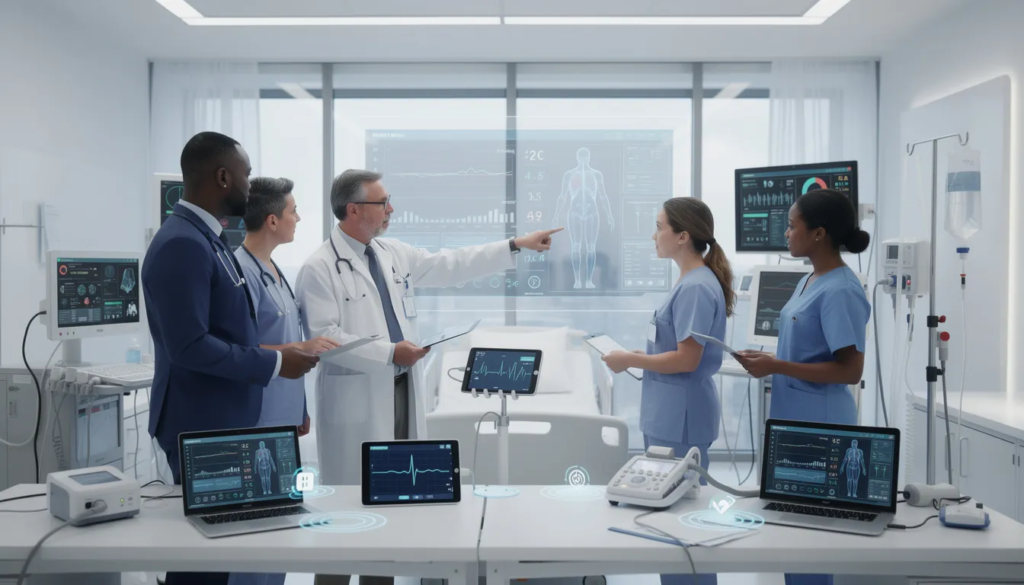
Conclusion
EMR development in 2025 represents a critical strategic investment for healthcare organizations seeking to improve patient outcomes, enhance operational efficiency, and position themselves for future healthcare delivery models. The comprehensive landscape of electronic medical records development encompasses technical architecture decisions, regulatory compliance requirements, user experience optimization, and long-term strategic planning that extends far beyond simple software development.
The key to successful EMR development lies in understanding that technology alone cannot transform healthcare delivery. Organizations must balance technical excellence with deep clinical workflow understanding, comprehensive user engagement, and systematic change management. The statistics demonstrate clear value: Vermont hospitals achieved 60% reductions in medication errors, M Health Fairview saved 20 minutes per provider per day, and Northern Light Health decreased cardiac readmissions through well-implemented EMR systems.
Cost considerations require realistic planning, with basic EMR development starting at $150,000-$400,000 and advanced platforms exceeding $1,000,000. However, organizations typically see positive returns within 18-24 months through operational efficiencies, improved billing capture, and enhanced care quality. The ongoing maintenance costs of approximately $1,200 per user annually represent necessary investments in system security, regulatory compliance, and continuous improvement.
The regulatory environment continues evolving, with HIPAA compliance, ONC certification, and 21st Century Cures Act requirements shaping development priorities. Healthcare organizations must plan for comprehensive compliance from the earliest design phases while maintaining flexibility for future regulatory changes. International considerations add complexity for organizations serving global patients or operating across borders.
Technology trends including AI integration, voice recognition, blockchain applications, and IoMT connectivity promise to enhance EMR capabilities significantly. However, healthcare organizations should prioritize proven technologies with strong industry adoption while maintaining openness to emerging innovations that demonstrate clear clinical value and regulatory compliance.
The development process requires systematic approach through 10 essential steps, from discovery and requirements gathering through testing, deployment, and training. Success depends on following best practices like MVP development, comprehensive user engagement, early data migration planning, and phased rollout strategies while avoiding common pitfalls of over-customization and inadequate change management.
As healthcare continues moving toward value-based care, precision medicine, and patient-centered delivery models, EMR systems must provide the technological foundation for these transformations. The future belongs to healthcare organizations that invest in flexible, interoperable EMR platforms enabling integration of advanced technologies while maintaining the reliability, security, and usability that clinical excellence demands.
The decision to pursue custom ehr software development versus commercial solutions depends on organizational needs, technical capabilities, and strategic objectives. Regardless of approach, healthcare providers must prioritize patient data security, clinical workflow optimization, and long-term scalability to achieve maximum value from their EMR investments.
Success in EMR development ultimately measures not by technical sophistication alone, but by improved patient outcomes, enhanced provider satisfaction, and operational excellence that supports the fundamental mission of healthcare organizations: delivering safe, effective, and compassionate patient care.
Leave a Reply